― 日本の動物園で見られる、カピバラの「打たせ湯」文化 ―
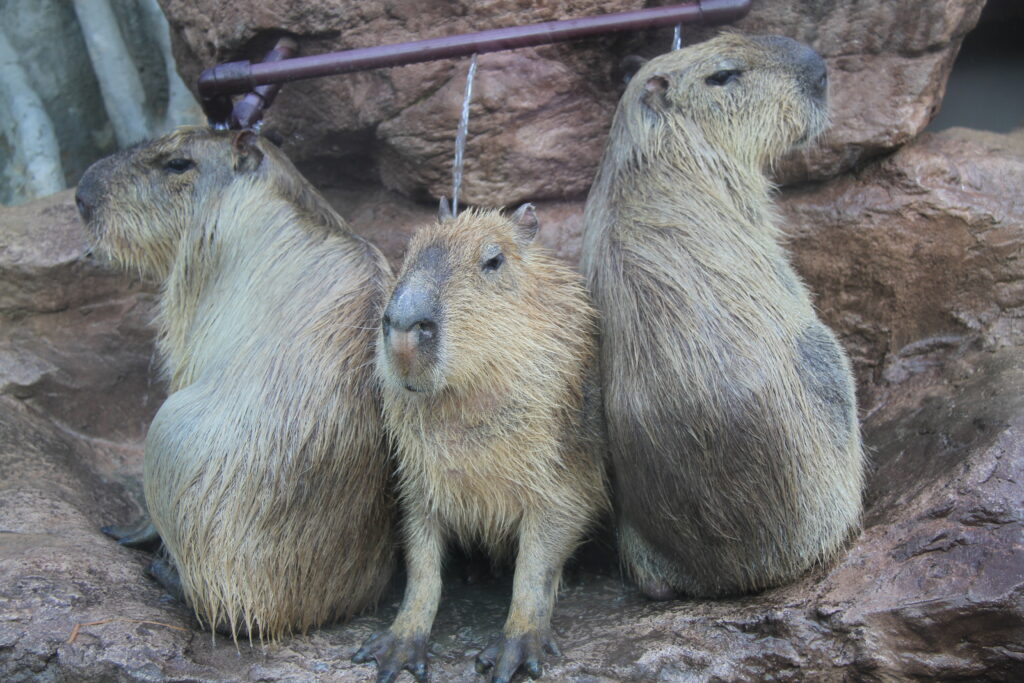
Capybaras are native to South America and are well known for spending time in rivers and wetlands.
However, the sight of capybaras calmly enjoying hot water baths is something you will see almost exclusively in Japan.
For many visitors from overseas, this raises a simple question:
Why are capybaras bathing in hot water at Japanese zoos?
This Is Not a Natural Behavior
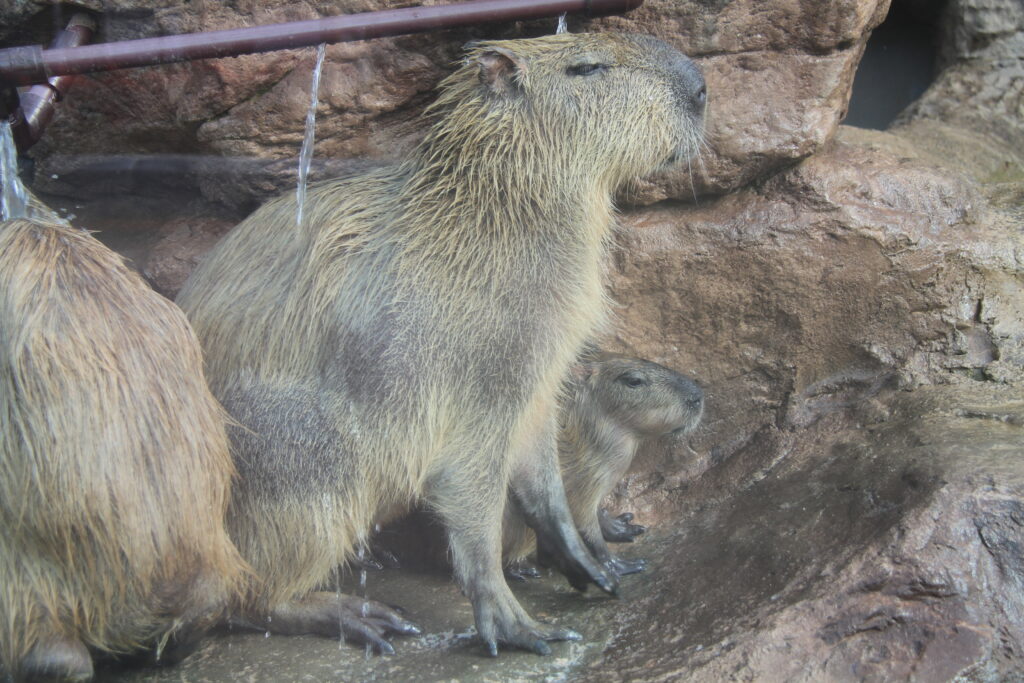
In the wild, capybaras enter water to regulate body temperature, escape predators, or rest.
They do not soak in warm water or stand under waterfalls.
The hot water baths seen in Japanese zoos are entirely human-created.
They are part of zoo management practices designed for animals living in a colder climate than their natural habitat.
How Capybara Hot Baths Started in Japanese Zoos
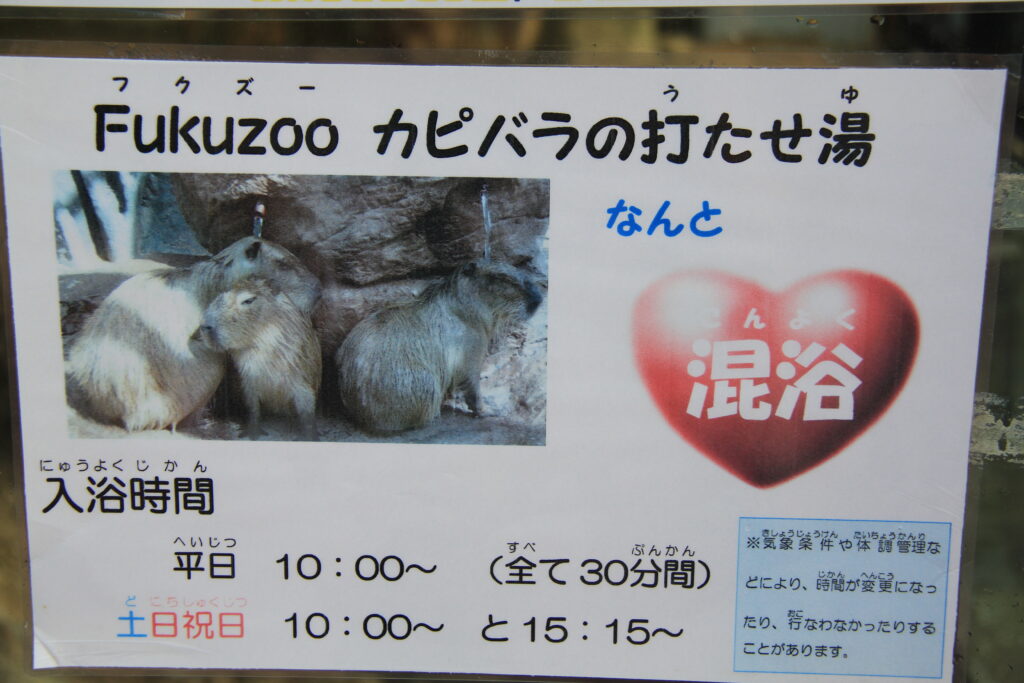
The idea began as a practical solution.
During winter, Japanese zoos needed a way to help capybaras stay warm and prevent dry skin.
Caretakers noticed that capybaras remained calm and relaxed when warm water was gently poured over their bodies.
Over time, this practice evolved into a seasonal winter feature, often scheduled at specific times of day and clearly explained to visitors.
Today, it has become a uniquely Japanese zoo tradition.
Why Do Capybaras Look Like They Enjoy It?
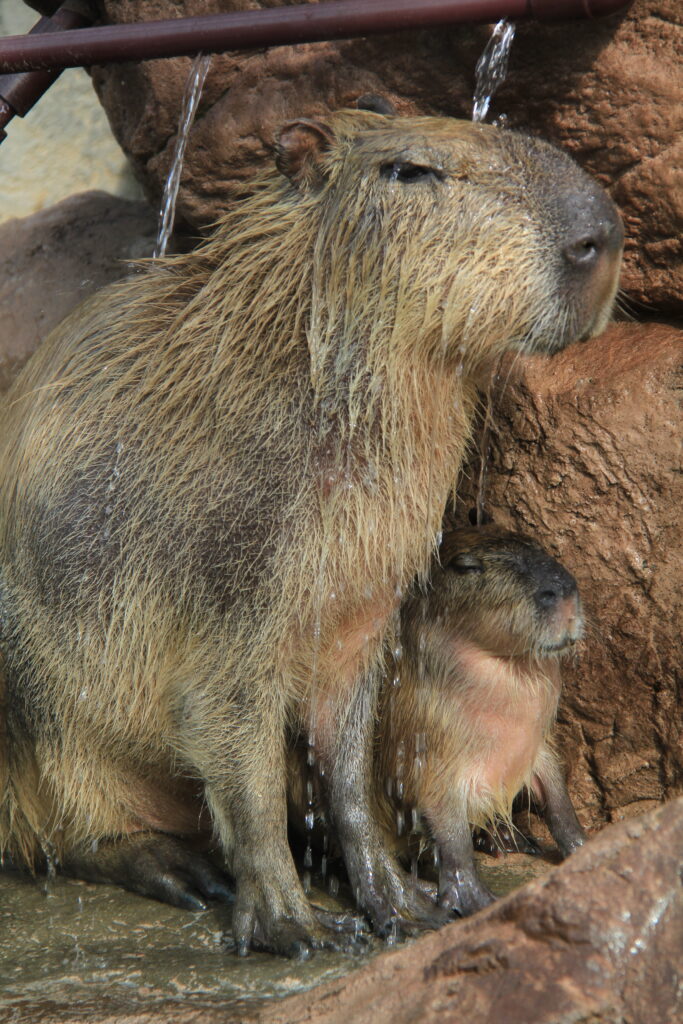
Capybaras are naturally calm animals.
When exposed to warm water, they often remain still, close their eyes, and relax their posture.
This behavior gives the impression that they are “enjoying” the bath — and in many cases, they appear genuinely comfortable.
Especially notable is how multiple capybaras sit quietly together, creating a peaceful and almost meditative scene that feels distinctly Japanese.
Is This Seen Outside Japan?
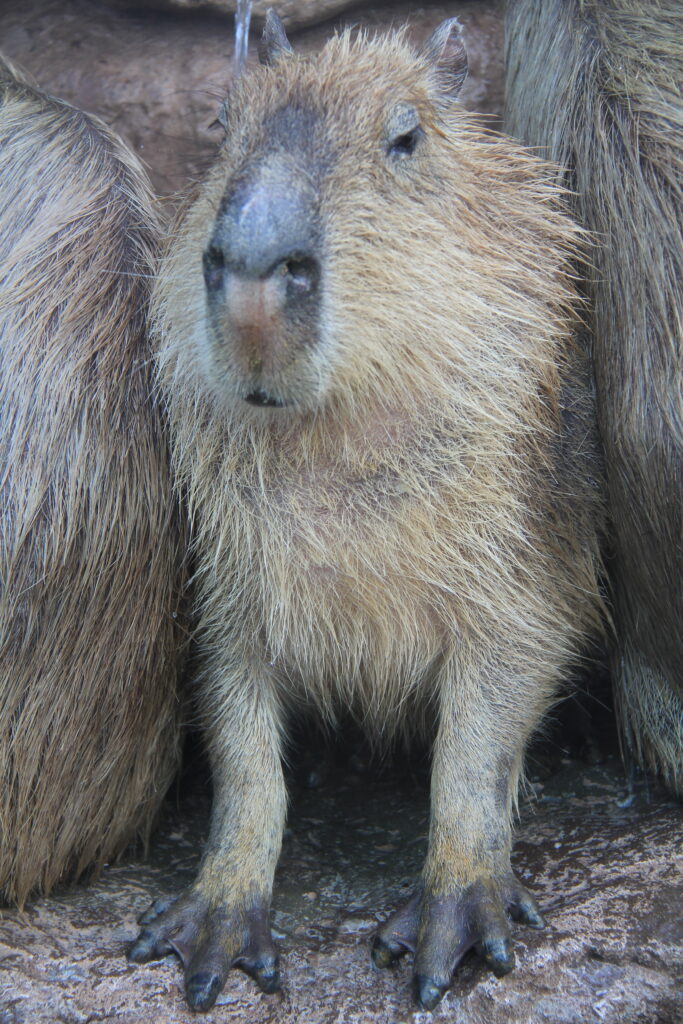
Outside Japan, most zoos provide pools or shallow water areas for capybaras.
However, hot water baths and waterfall-style bathing are extremely rare.
This makes the capybara hot bath a cultural crossover:
South American wildlife meeting Japanese bathing culture.
A Uniquely Japanese Zoo Culture
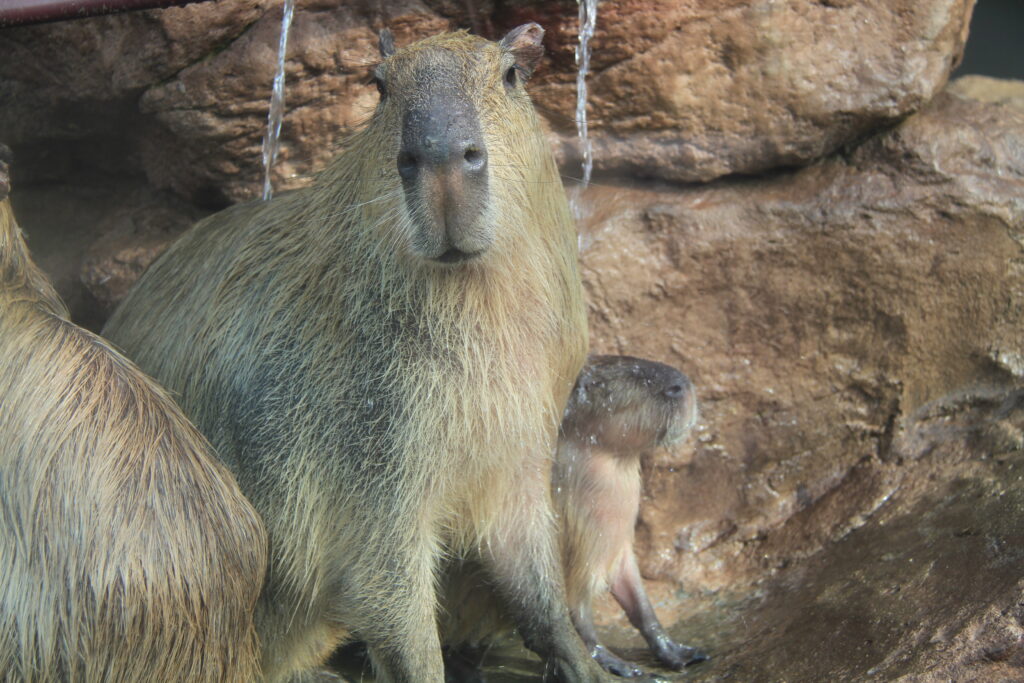
Capybara hot baths are not about entertainment alone.
They reflect how Japanese zoos often combine animal care, seasonal awareness, and cultural sensibility.
It is a quiet scene — gentle water, relaxed animals, and visitors watching in silence.
For many people, it becomes an unforgettable image of Japan.
At the end of the bath, one of the adults slowly looked toward the camera.
It felt less like an animal on display,
and more like a quiet moment shared across cultures.