日本の変わり種の履物
― 暮らしの知恵と工夫、そして伝説 ―
Footwear in Japan was not only shaped by fashion or social rank, but also by environment, work, and imagination.
Some shoes were created to survive harsh conditions.
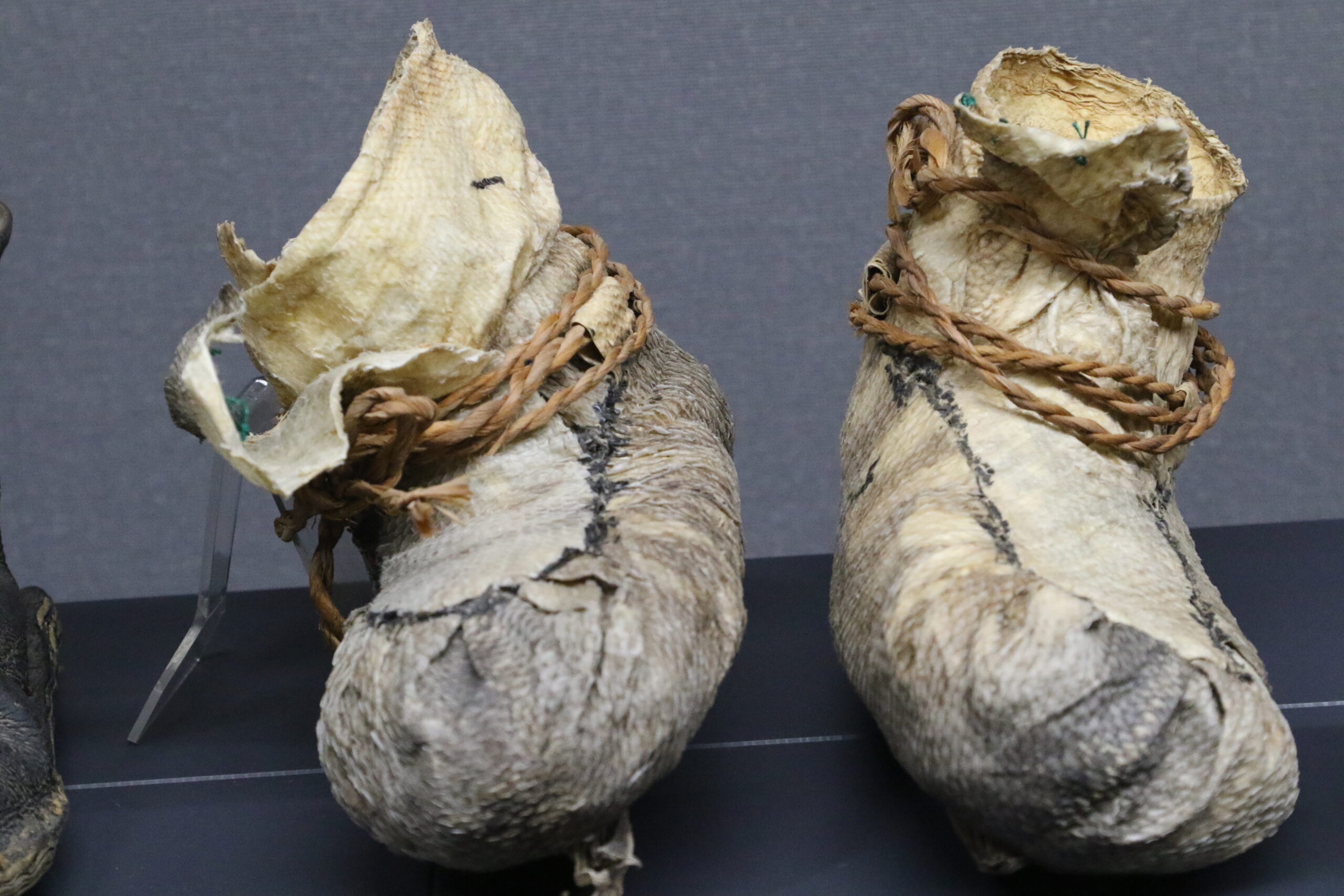
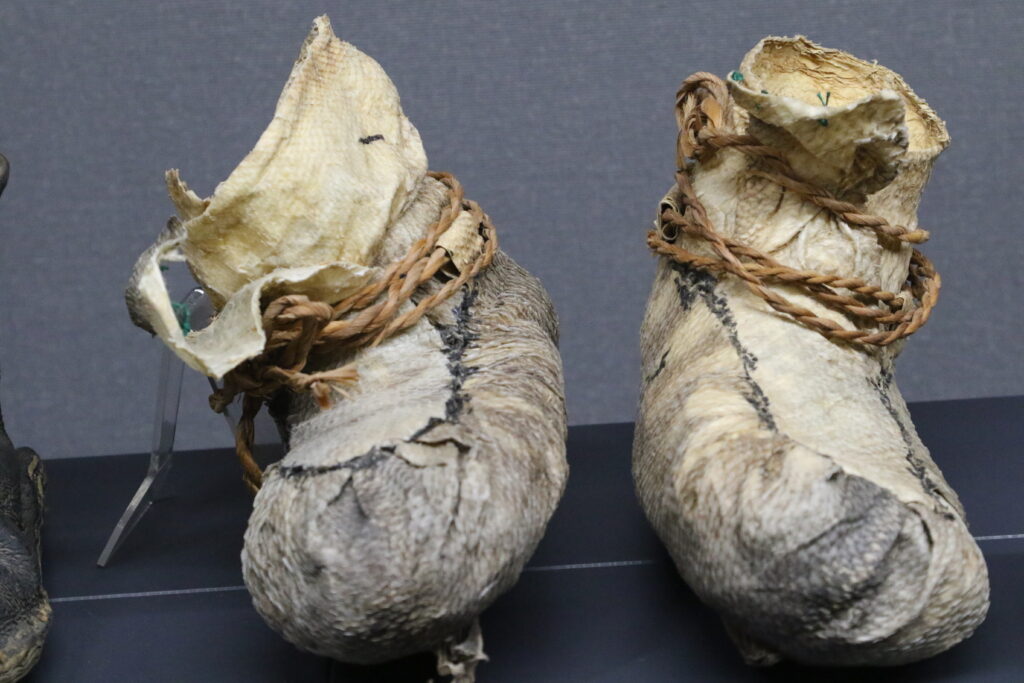
In northern regions, footwear made from animal skins—such as salmon—was used by indigenous communities, including the Ainu. These shoes made full use of natural resources, providing warmth and flexibility in cold climates.
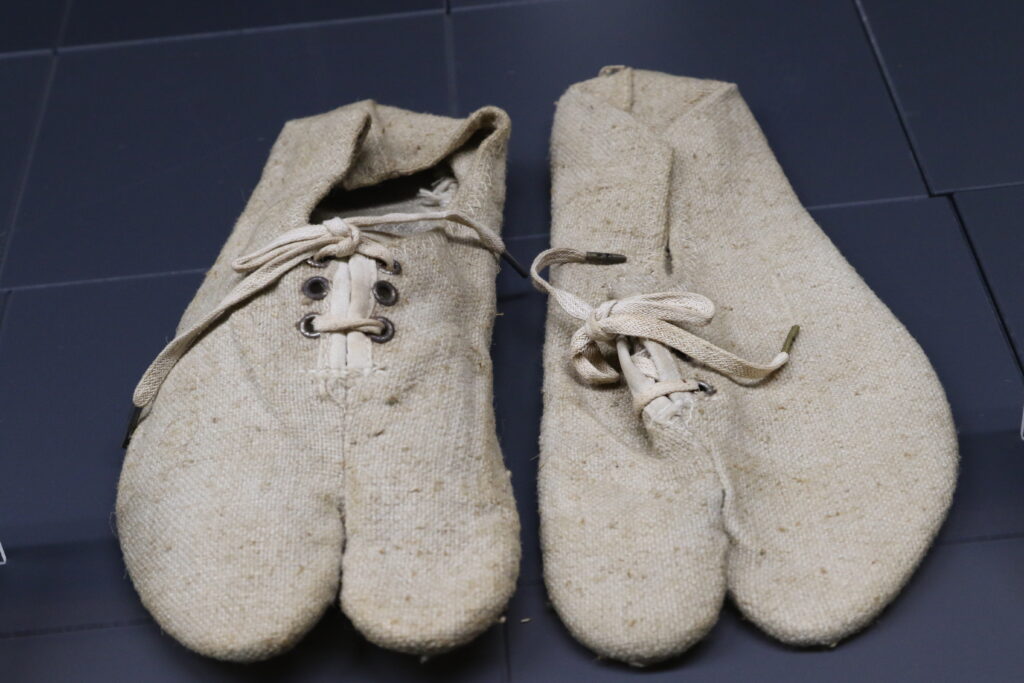
Other designs focused on endurance and movement.
Lightweight, foot-shaped footwear allowed people to walk long distances efficiently, anticipating ideas similar to modern marathon shoes. Practicality and balance were central to their form.
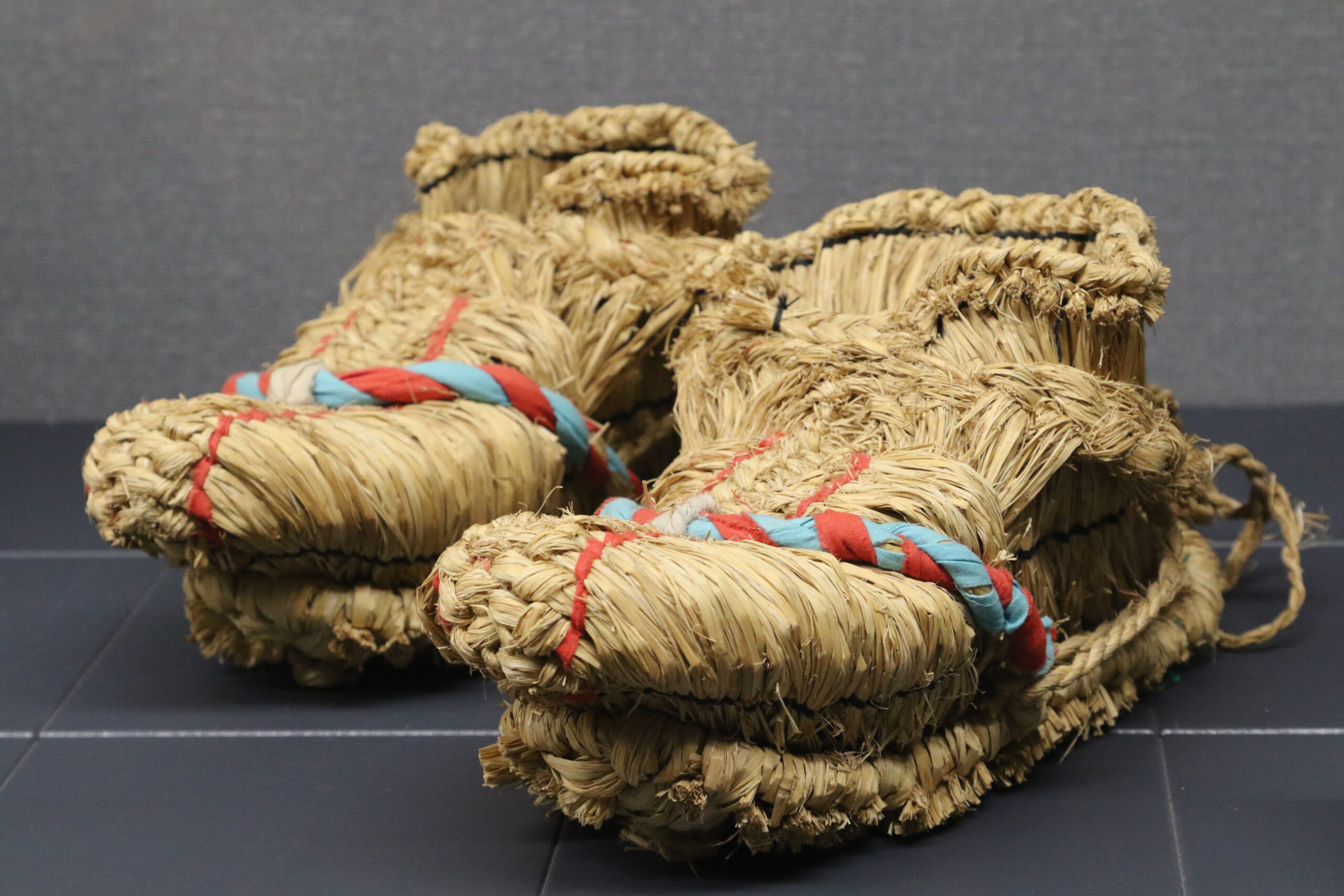
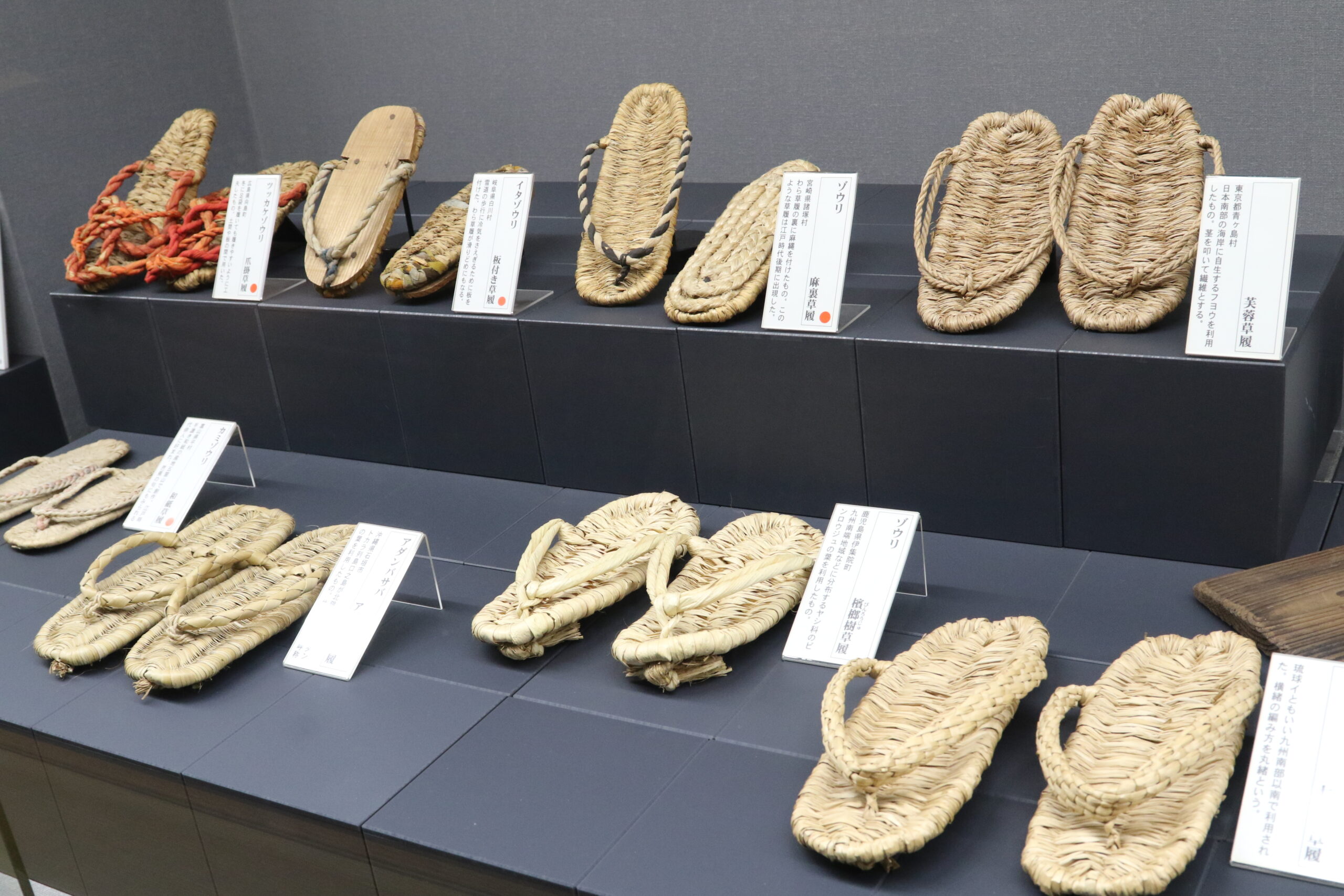
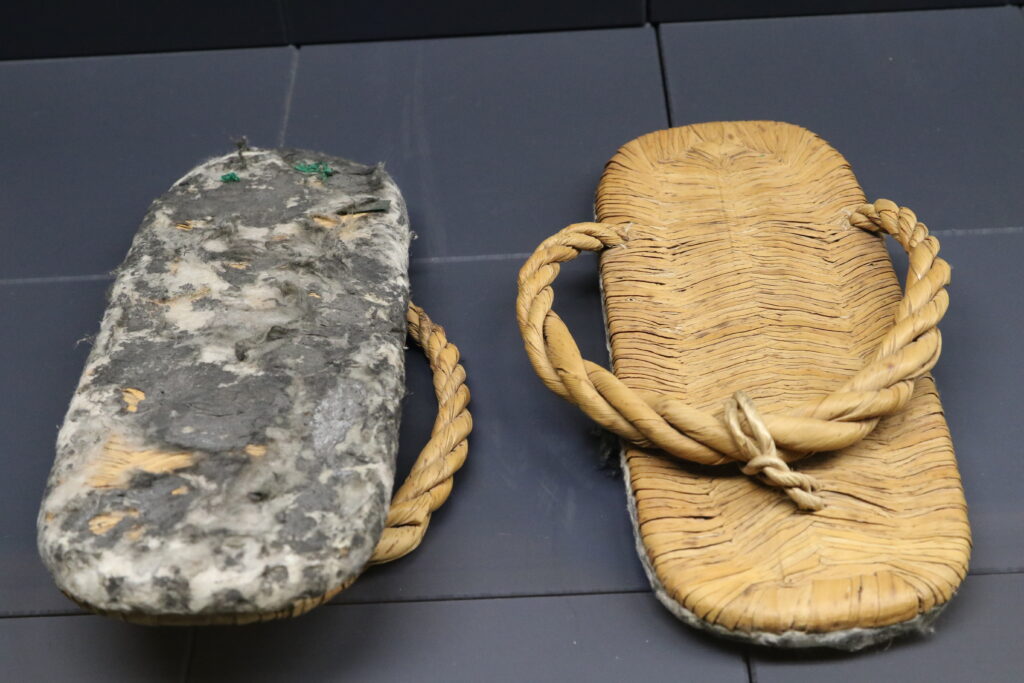
There were also shoes designed to reduce sound.
Made from soft plant materials, these sandals helped soften footsteps, reflecting the needs of work, travel, or quiet movement in daily life.
As we move further, the boundary between practicality and imagination begins to blur.
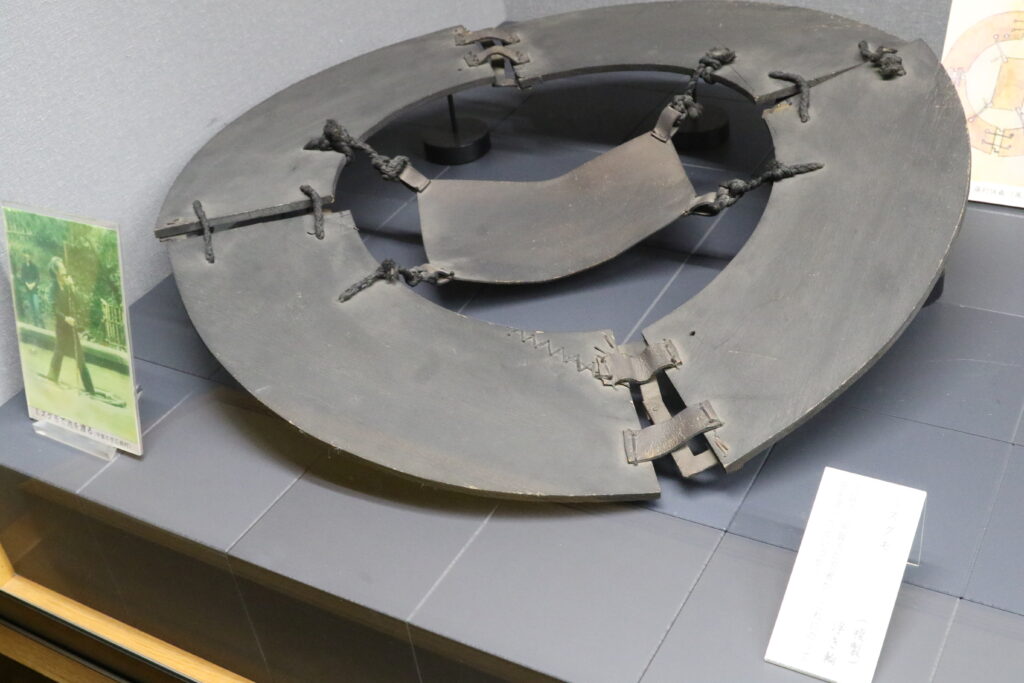
Some unusual footwear is often associated with legends of ninja.
They are sometimes described as tools that allowed one to walk on water. However, there is no clear historical evidence that such devices were ever used effectively in real conditions.
Rather than proven tools, these objects likely represent how creativity, folklore, and fascination with ninja evolved over time.
They remind us that not all footwear was made only to walk the ground—some were created to walk through stories.
日本の履物は、身分や装いだけでなく、自然環境や仕事、そして想像力によっても形づくられてきました。
寒冷地では、鮭の皮など動物素材を活用した履物が用いられ、厳しい自然の中で暮らすための知恵が反映されています。
また、長距離移動に適した軽量な履物や、音を立てにくい草履など、実用性を重視した工夫も見られます。
そして最後に登場するのが、忍者と結びつけて語られる履物です。
水の上を歩けたとされるものもありますが、実際に使われていた確かな証拠はなく、伝承や後世の想像による要素が強いと考えられます。
事実としての履物と、物語としての履物。
その境界線に立つことで、当時の人々の暮らしだけでなく、語り継がれる文化そのものが見えてきます。