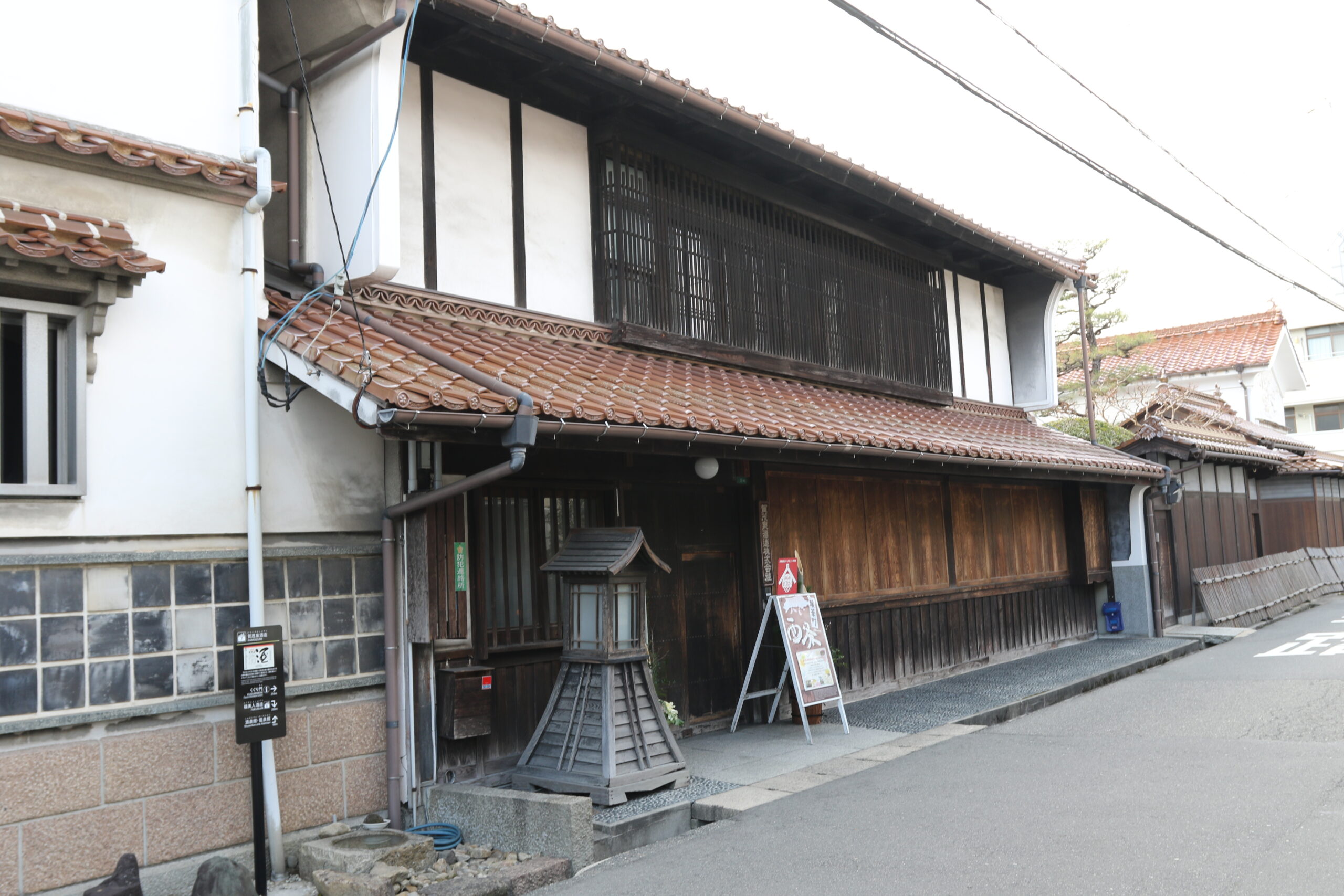
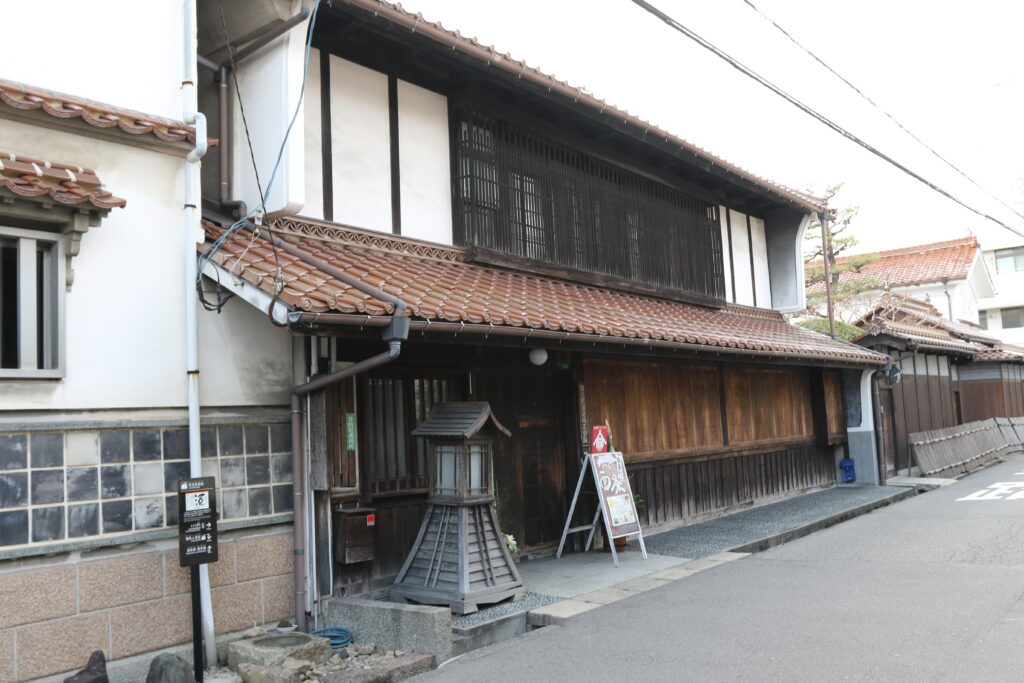
At first glance, this street in Saijo looks like an ordinary path between traditional sake breweries.
People walk through it every day without stopping, without noticing anything unusual.
Yet, tucked quietly along the road, a group of uncarved stone figures stands in silence.
These stones are not part of a temple, nor are they marked as a tourist attraction.
They represent a form of Japanese folk belief — a shared place of prayer for unnamed spirits, ancestors, and the land itself. Over generations, stones were added one by one, each placed with a quiet wish for safety, harmony, and protection.
Saijo has long been a town shaped by sake brewing.
Water, fire, steam, and heavy wooden barrels were once carried along these narrow streets from early morning to late at night. Accidents, illness, and loss were part of everyday life. Rather than separating prayer from daily routines, people placed it directly along their path.
What makes this scene remarkable is its simplicity.
No signs explain its meaning. No barriers separate it from modern life. The stones remain where they have always been — beside the road, sharing space with houses, breweries, and passersby.
This coexistence of the sacred and the ordinary is deeply Japanese.
Here, prayer does not demand attention. It simply waits, quietly, as people pass by.
Short Caption Option (if you want one under the photo)
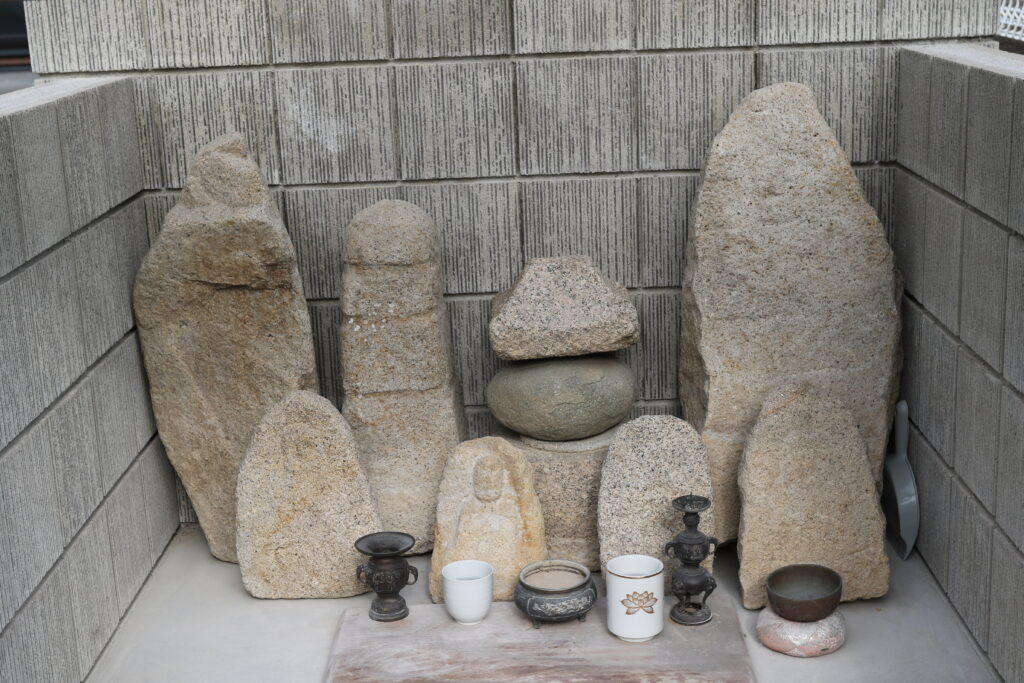
Stone prayers quietly standing along an everyday street in Saijo’s historic sake brewery district.