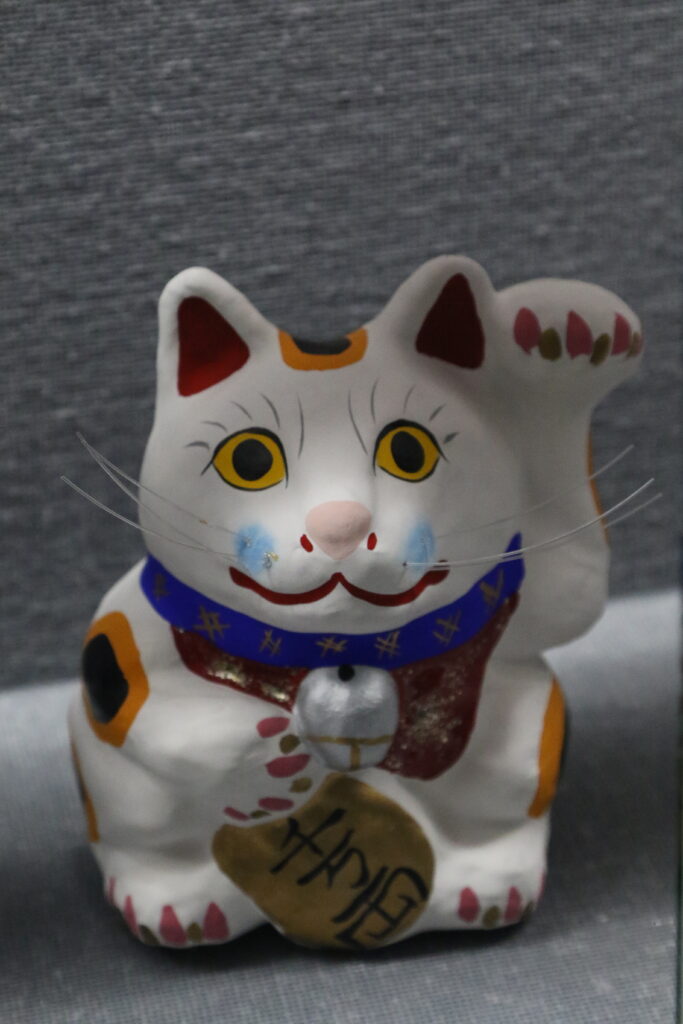
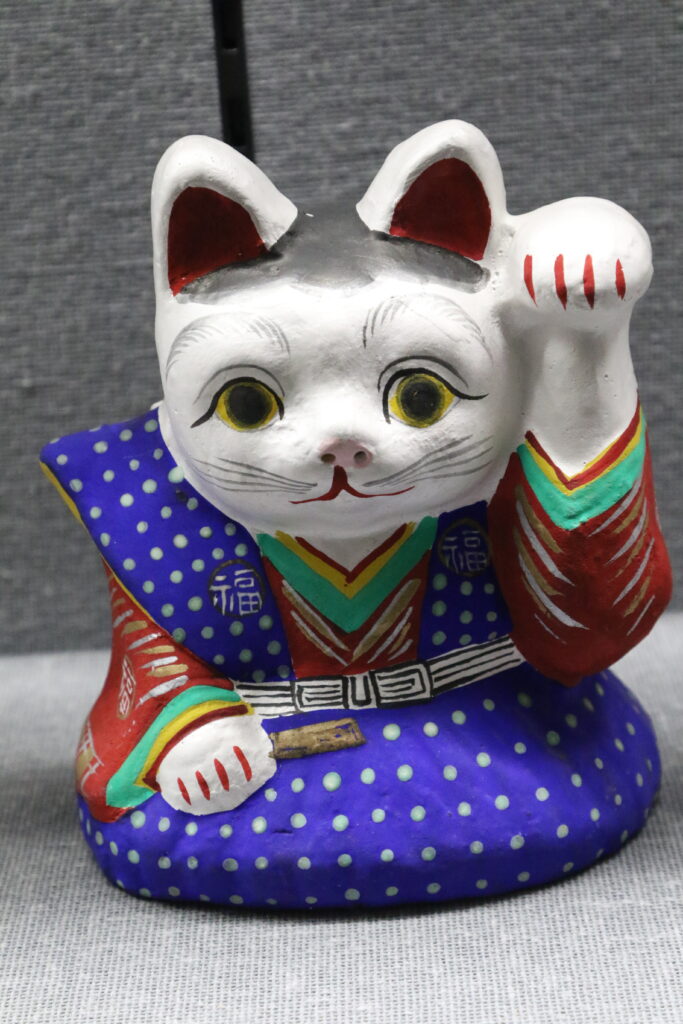
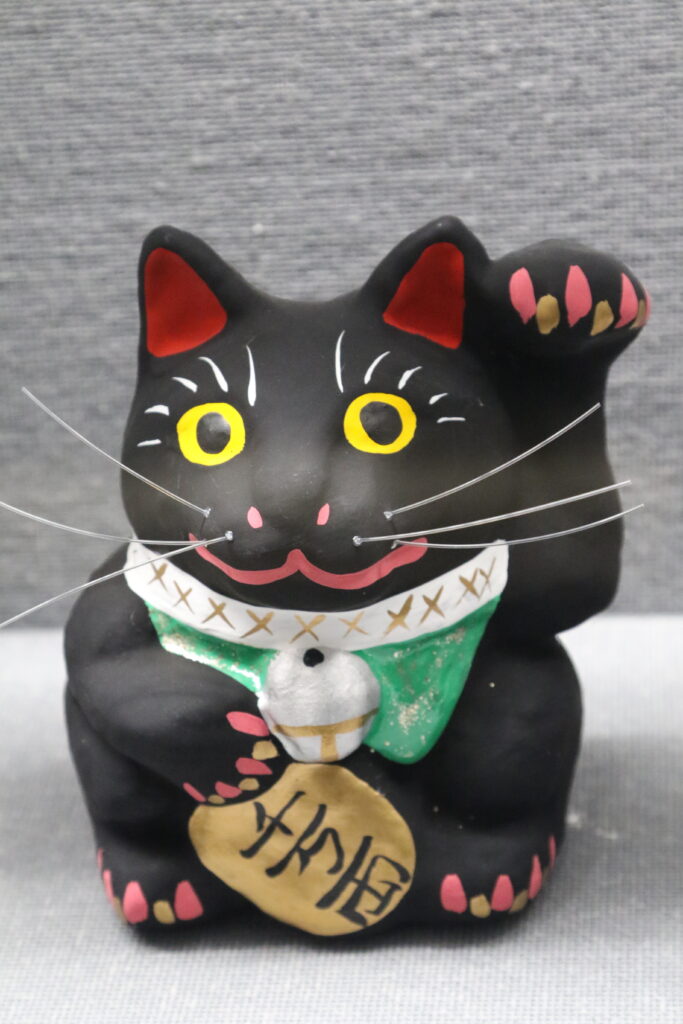
You have probably seen this cat before.
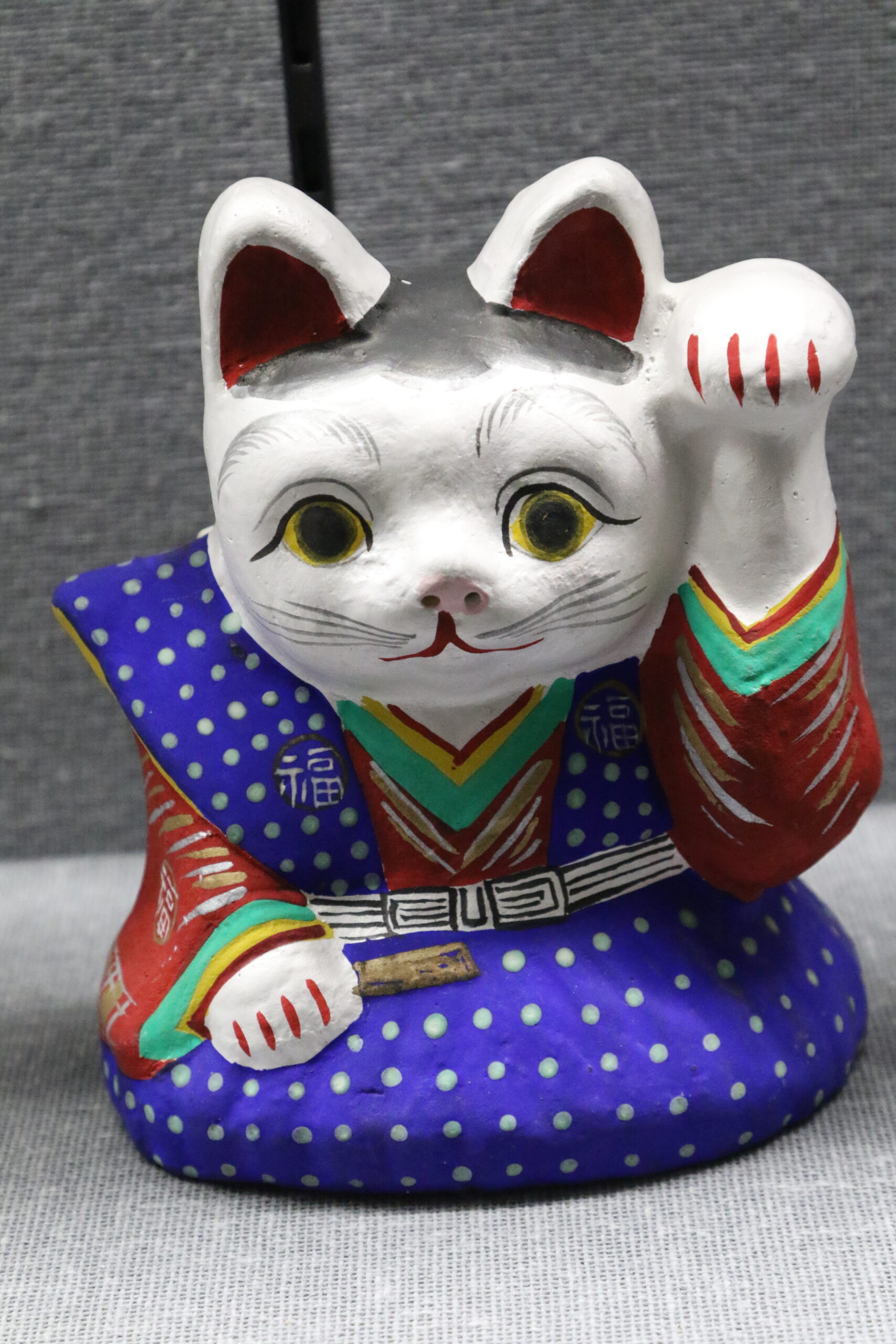
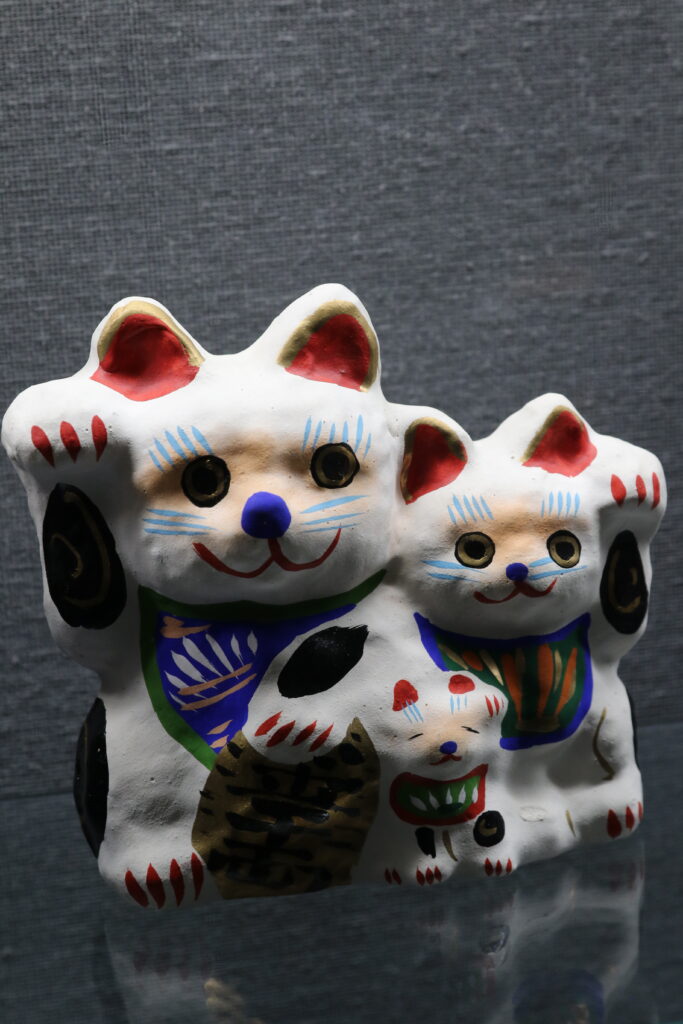
In Japanese shops, restaurants, and souvenir stores, a small cat sits quietly with one paw raised.
Many people assume it is waving.
But it is not.
The Raised Paw Is Not a Wave
In Japan, the gesture of calling someone is different from many Western countries.
Instead of waving with the palm facing outward, the hand is turned downward and pulled inward.
The raised paw of the Maneki-neko represents this gesture.
It is not saying goodbye — it is inviting something closer.
Right Paw or Left Paw?
This is where the meaning becomes more specific.
A right paw raised Maneki-neko is believed to invite money and financial fortune.
It is often placed in shops and businesses.
A left paw raised Maneki-neko is said to invite people and customers.
This version is commonly seen at entrances, welcoming visitors inside.
Some modern figures even raise both paws, symbolizing protection or an abundance of good fortune — though traditionally, raising both was sometimes considered excessive.
Colors That Carry Meaning
The color of the Maneki-neko also matters.
- White represents general good luck and purity.
- Black is associated with protection and warding off evil.
- Gold (a modern addition) symbolizes wealth and prosperity.
These meanings are not religious rules, but everyday symbols passed down through daily life.
A Quiet Symbol of Daily Wishes
Maneki-neko is not a sacred object locked away in temples.
It sits casually on shelves, counters, and windowsills.
It reflects a very Japanese idea:
hope expressed quietly, without words.
Not a grand prayer — just a small wish for good fortune, patiently waiting to be invited in.