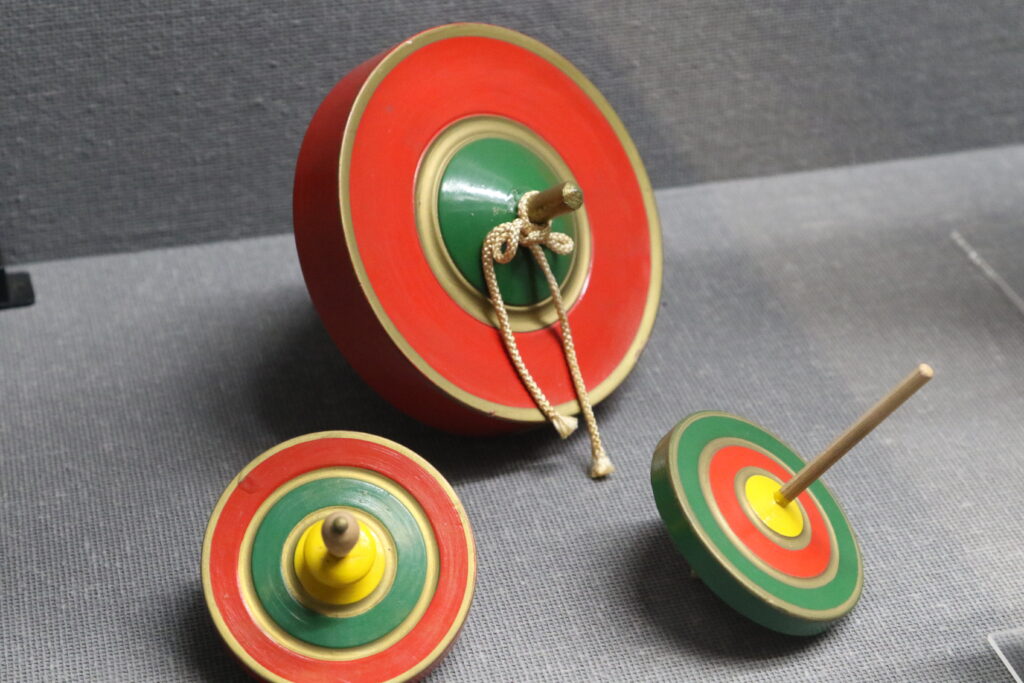
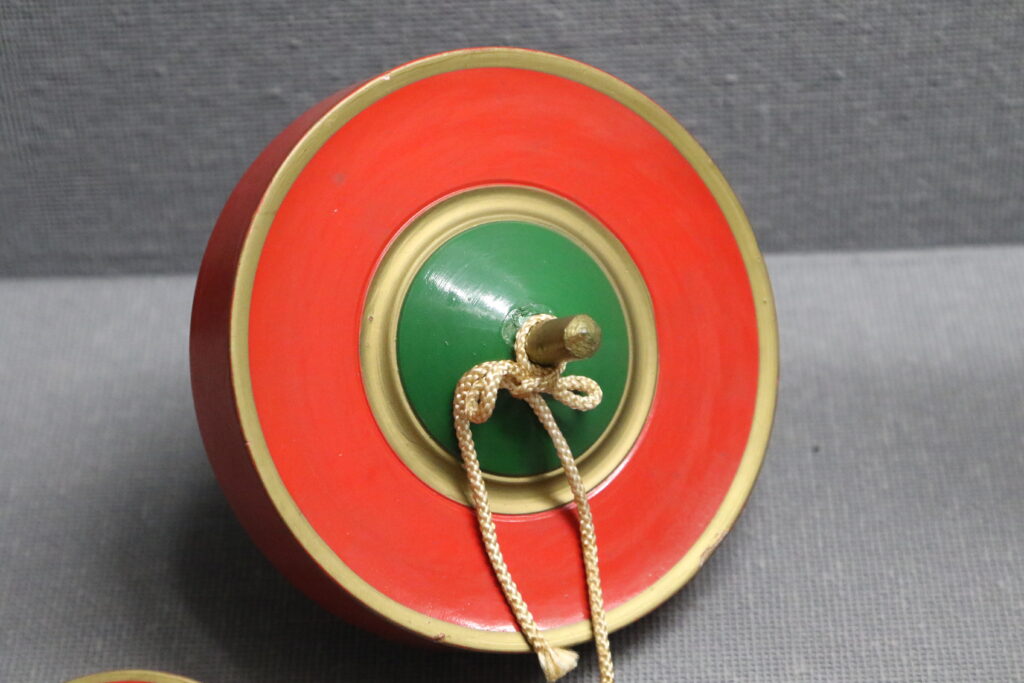
Japanese spinning tops, known as koma, are more than simple toys.
They represent a unique blend of play, craftsmanship, and cultural symbolism that has been refined over generations.
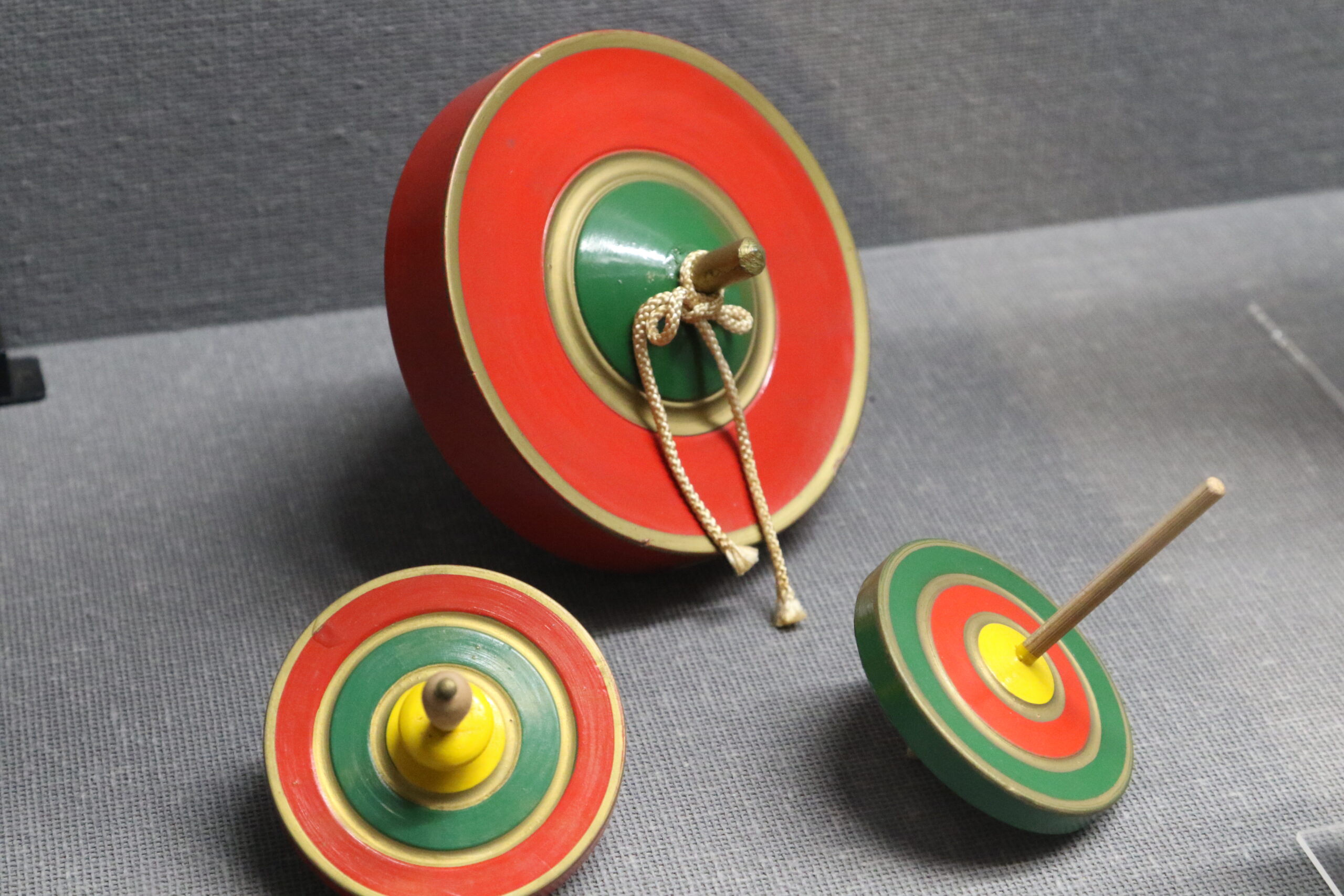
Unlike many spinning tops found around the world, Japanese koma are distinguished by their vivid colors, precise balance, and decorative concentric patterns. These designs are not merely aesthetic; they reflect traditional beliefs in good fortune, harmony, and the smooth flow of life.
Historically, koma were enjoyed by children during New Year celebrations, but they also served as talismans symbolizing prosperity and continuity. A well-balanced top that spins steadily was seen as a sign of a well-balanced life.
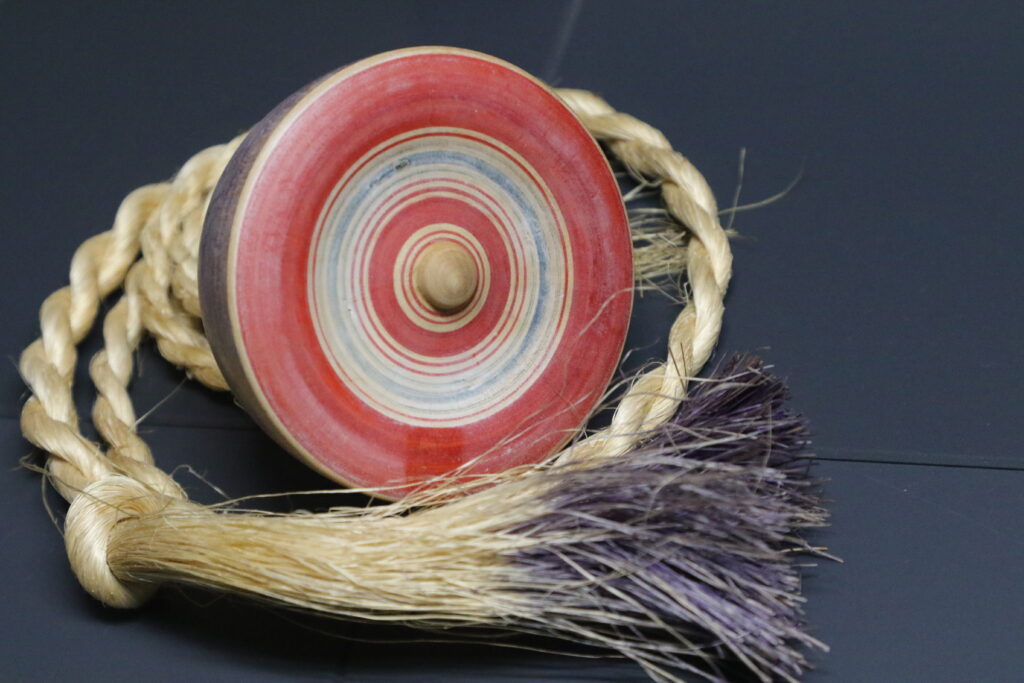
This photograph captures the quiet elegance of Japanese koma as handcrafted objects—each one shaped, painted, and finished with care. Through their form and color, they reveal how an everyday toy in Japan evolved into a small work of folk art, bridging entertainment and tradition.
How Are Spinning Tops Played Around the World?
Spinning tops exist in many cultures, but the way they are played varies widely from region to region.
In many parts of Europe and the Middle East, the most common game is simple endurance. Players spin their tops on the ground and compete to see whose top keeps spinning the longest. Stability and balance matter more than strength or technique.
In China, Mongolia, and parts of Eastern Europe, spinning tops are often played with whips. The top is kept in motion by repeatedly striking it, turning the game into a test of rhythm, stamina, and coordination. This style is dynamic and physically demanding, resembling a folk performance as much as a game.
In Central and South America, players frequently throw the top using a string. Accuracy and control are key—success is measured by how cleanly the top lands and spins, sometimes even hitting specific targets. This tradition strongly influenced modern competitive tops.
In some regions of Africa and the Middle East, spinning tops were not just toys. Their rotation was associated with spiritual power, fortune-telling, or rituals meant to ward off evil spirits.
Japan, however, developed a remarkably different approach.
Japanese koma games include battle tops, where players deliberately collide their tops to knock opponents out of the ring. This transformed spinning into a form of strategy and craftsmanship, where weight, shape, balance, and throwing technique all mattered.
While many cultures focused on keeping a top spinning, Japan turned spinning into competition, performance, and eventually art.