日本神話における「鬼」という存在
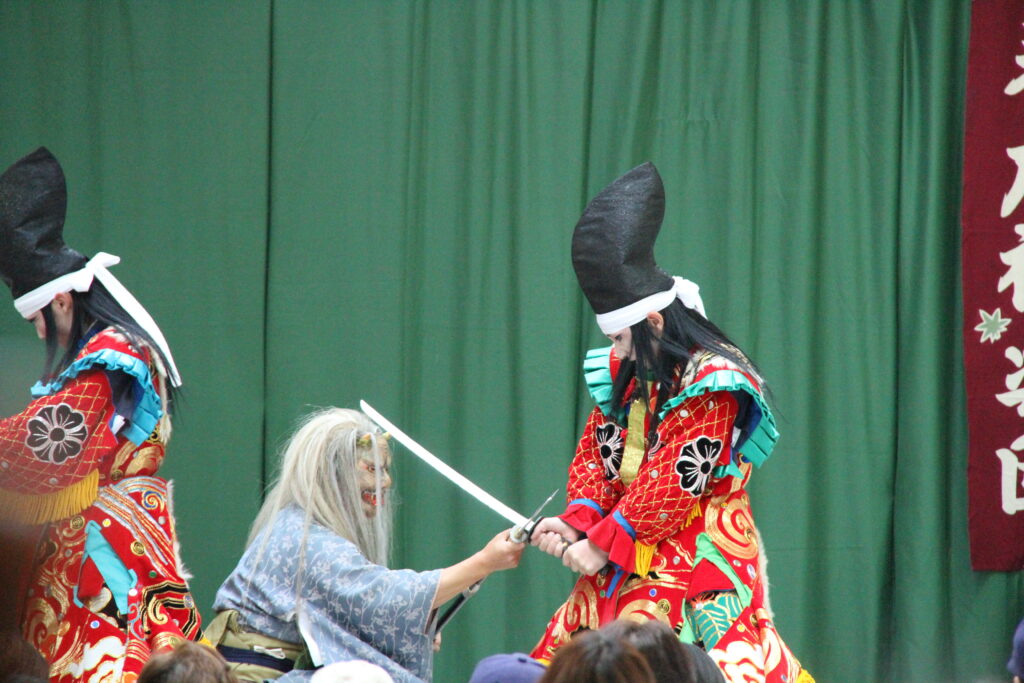
IwamiKagura is not simply a stage performance.
It is a living ritual, deeply rooted in Japanese mythology, where gods confront chaos and restore balance to the world.
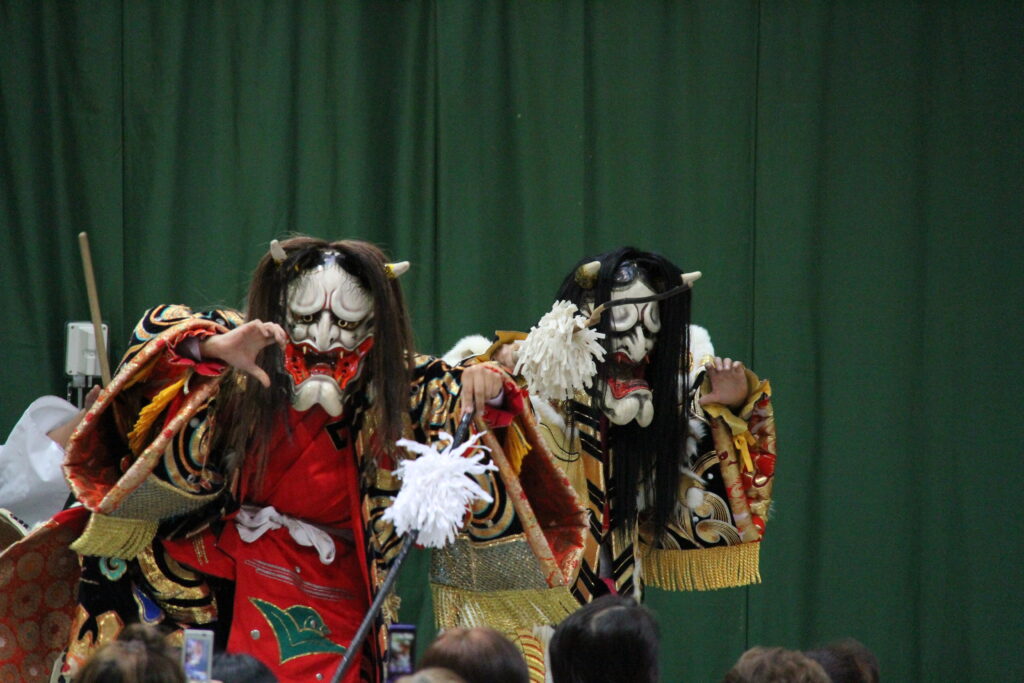
The Appearance of the Demon
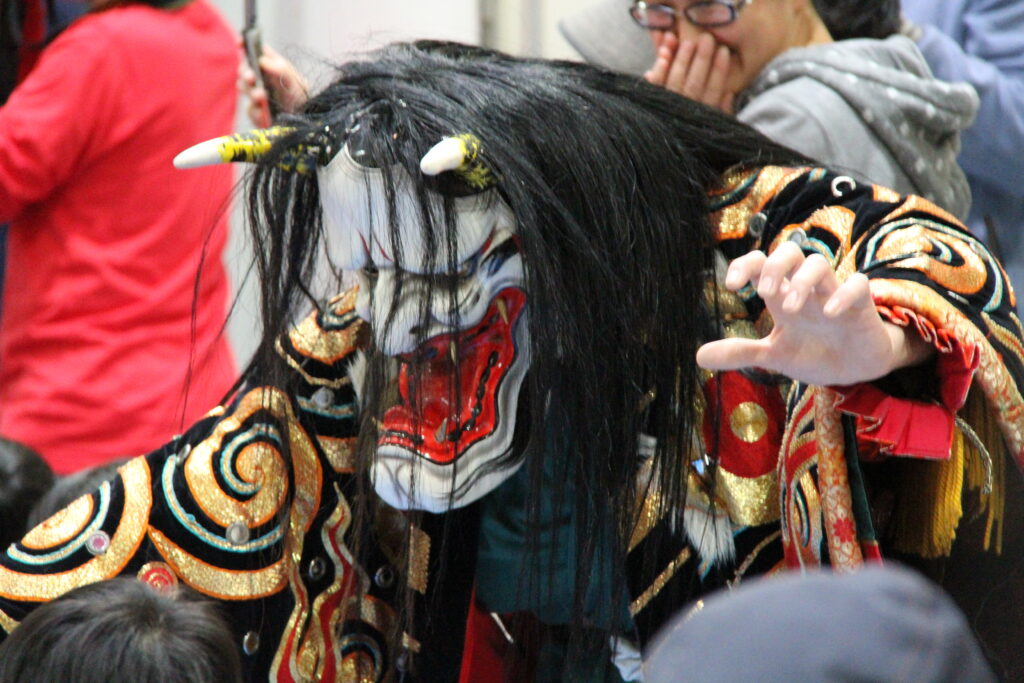
The story begins with the demon.
Its fierce mask, wild hair, and exaggerated movements are meant to embody chaos itself — disaster, disease, and the untamed forces of nature.
In Japanese mythology, demons are not imaginary monsters.
They represent real fears that once threatened everyday life.
As the demon advances, the atmosphere grows tense.
The audience is not merely watching a performance; they are witnessing the manifestation of disorder.
Chaos Multiplies
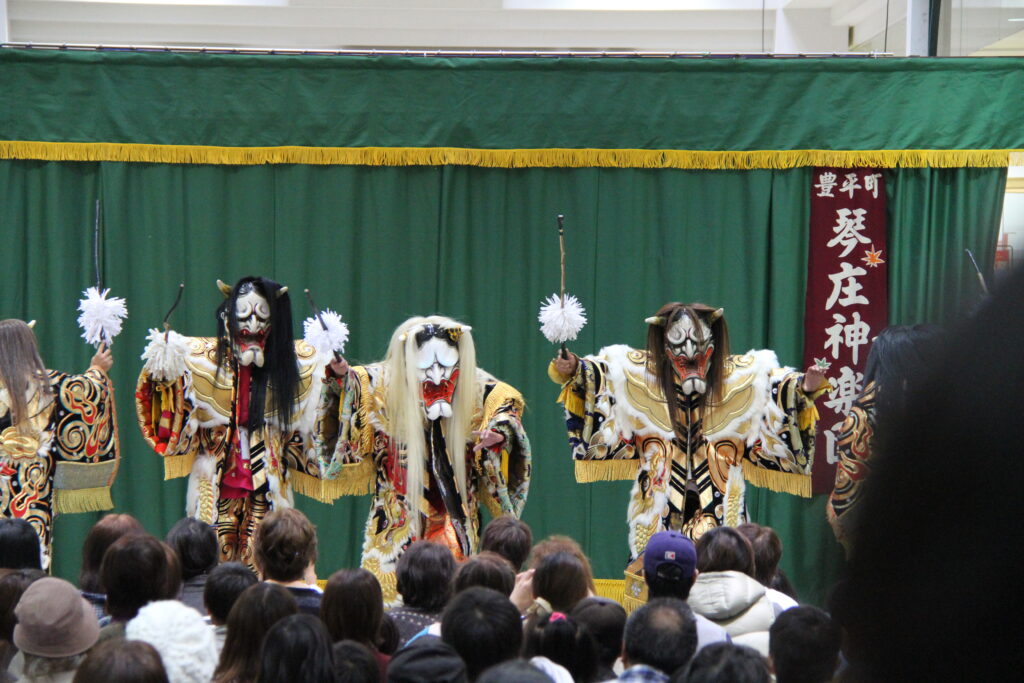
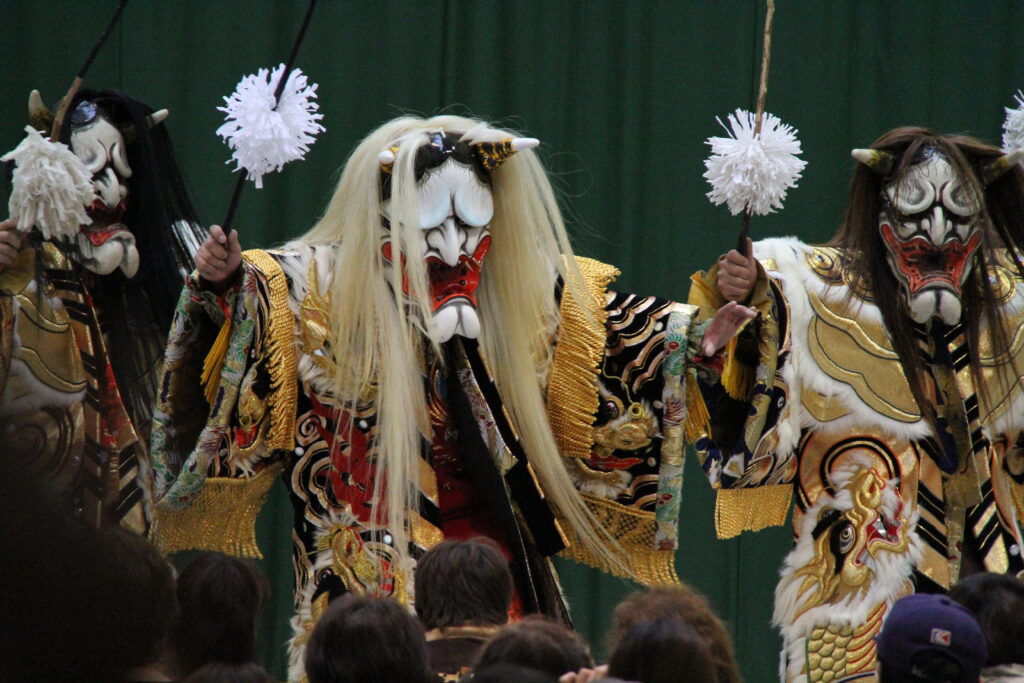
Soon, more demons appear.
This is not a battle against a single enemy, but against chaos spreading through the world.
Their synchronized movements and powerful gestures emphasize that this force cannot be overcome by human strength alone.
The Arrival of the Gods
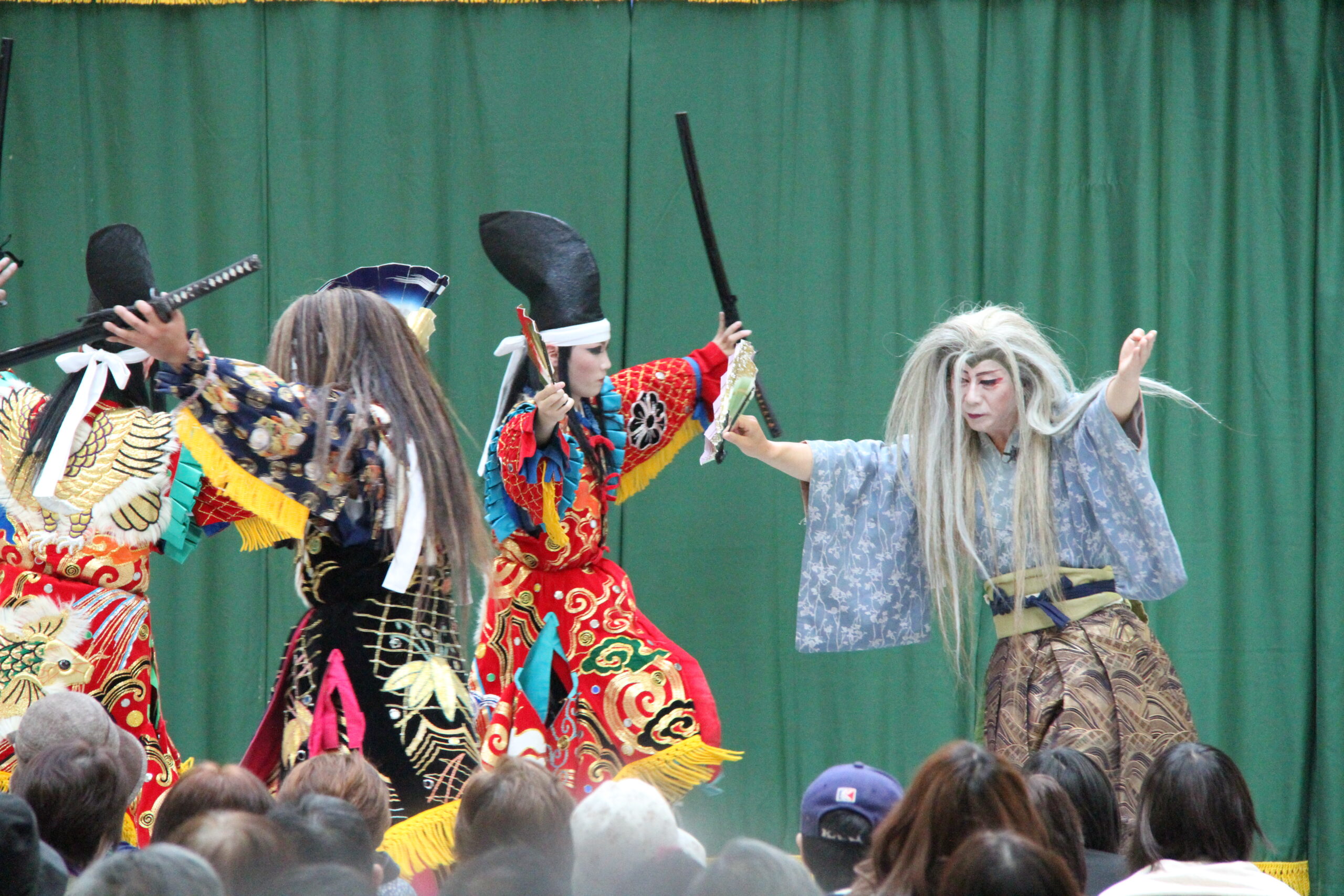
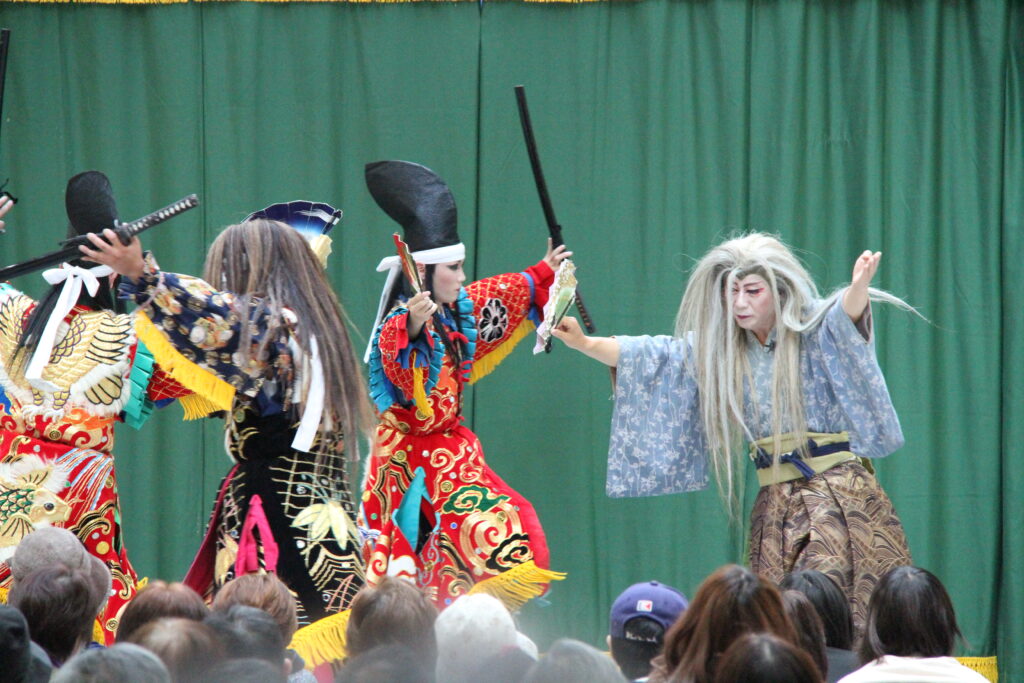
Then, the gods enter the stage.
Unlike the demons, their movements are controlled and deliberate.
They do not rush forward in anger.
They advance with purpose — as guardians of order.
Their presence alone begins to change the atmosphere.
This contrast between wild motion and calm authority lies at the heart of Iwami Kagura.
Confrontation
Gods and demons finally face one another.
The space between them tightens, and the ritual reaches its turning point.
This confrontation is not about destruction, but judgment.
The Subjugation
With a sacred sword, the god presses the demon down.
This moment is the climax of the ritual.
The demon is not killed.
It is subdued.
In Iwami Kagura, victory does not mean annihilation.
It means restoring balance, containing chaos, and returning harmony to the world.
A Ritual That Continues
There is no curtain call.
No clear ending.
Iwami Kagura reminds us that chaos never disappears entirely.
It must be confronted again and again, through ritual, memory, and belief.
And that is why this ancient performance is still danced today.
石見神楽では、鬼は単なる「悪」ではなく、
災いや混乱そのものを象徴する存在として描かれます。
神が鬼を倒すのではなく「鎮める」ことで、
世界の秩序が回復する——
それが、この神楽の本質です。