うさぎの島のその先にある、静かな寺
Near Japan’s famous Rabbit Island, there is a very different place.
No crowds, no animals, no noise.
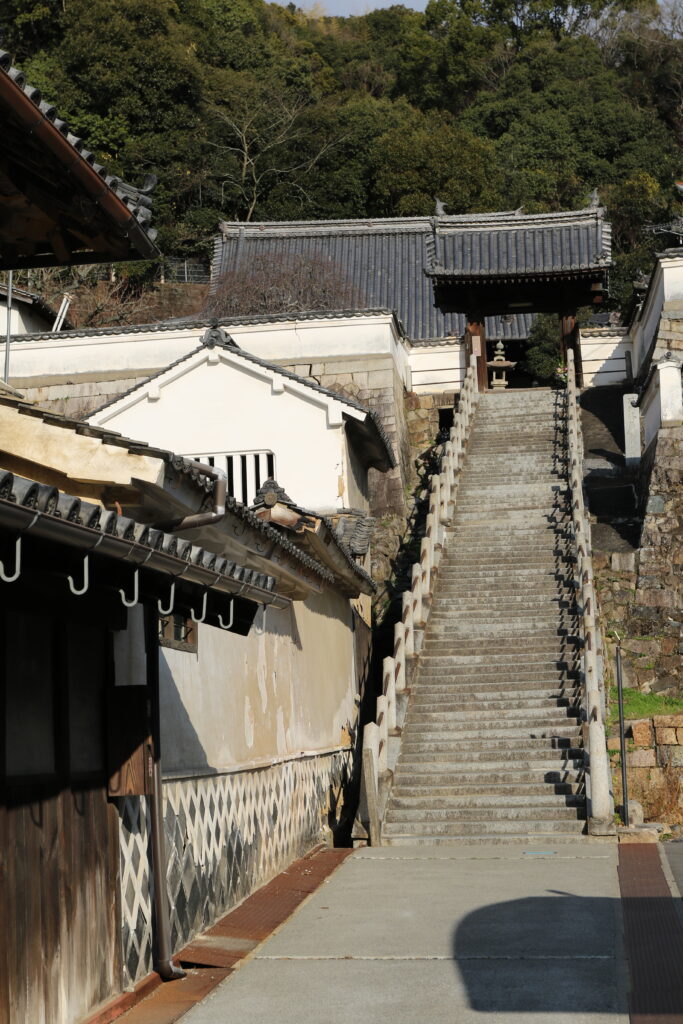
Only stone steps, old wood, and silence.
This is 西方寺, a quiet temple standing above the town of Takehara.
有名なうさぎ島の近くに、ほとんど知られていない静かな寺があります。
The long stone steps slowly separate visitors from everyday life.
As you climb higher, houses grow smaller, sounds fade away, and time seems to slow.
There were no tourists when I visited.
Only sunlight, shadows, and the sound of the wind.
石段を登るにつれて、町の気配が静かに遠ざかっていきます。
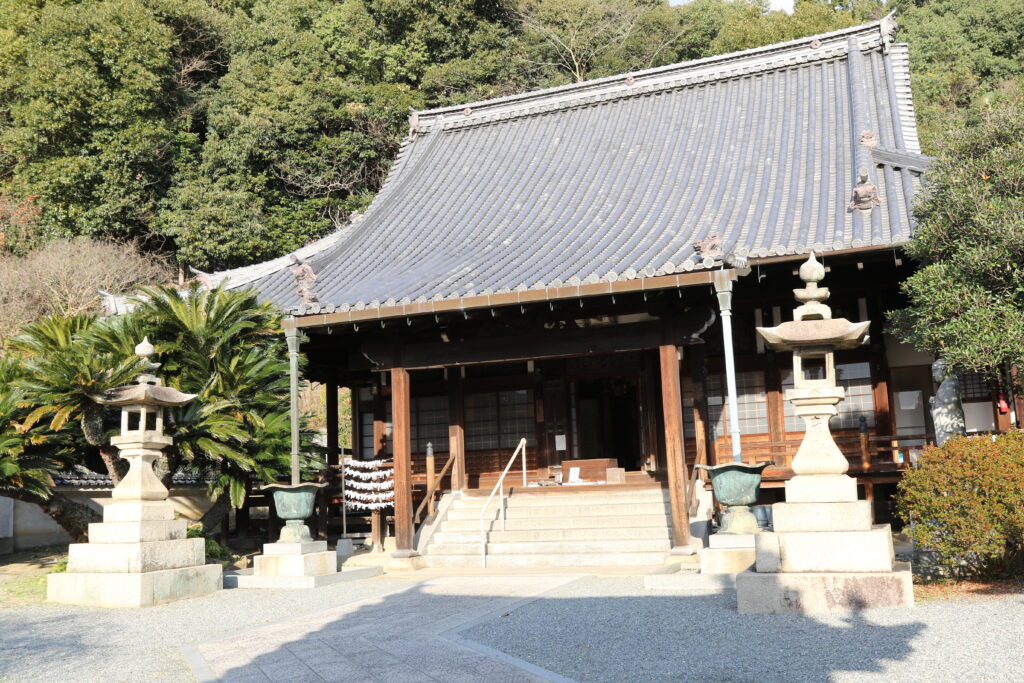
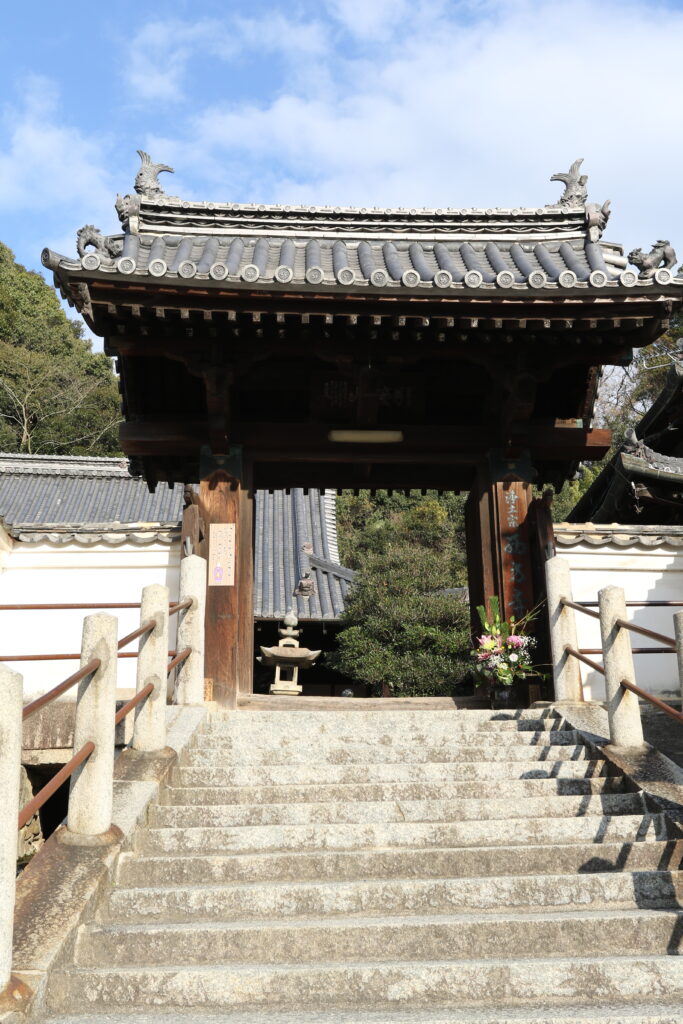
Passing through the temple gate feels like crossing a boundary.
This is not a place designed to impress, but a place designed to endure.
Wood worn by time.
Stone shaped by weather.
Nothing has been polished for display.
門は「入るための装置」ではなく、「切り替えるための境界」です。
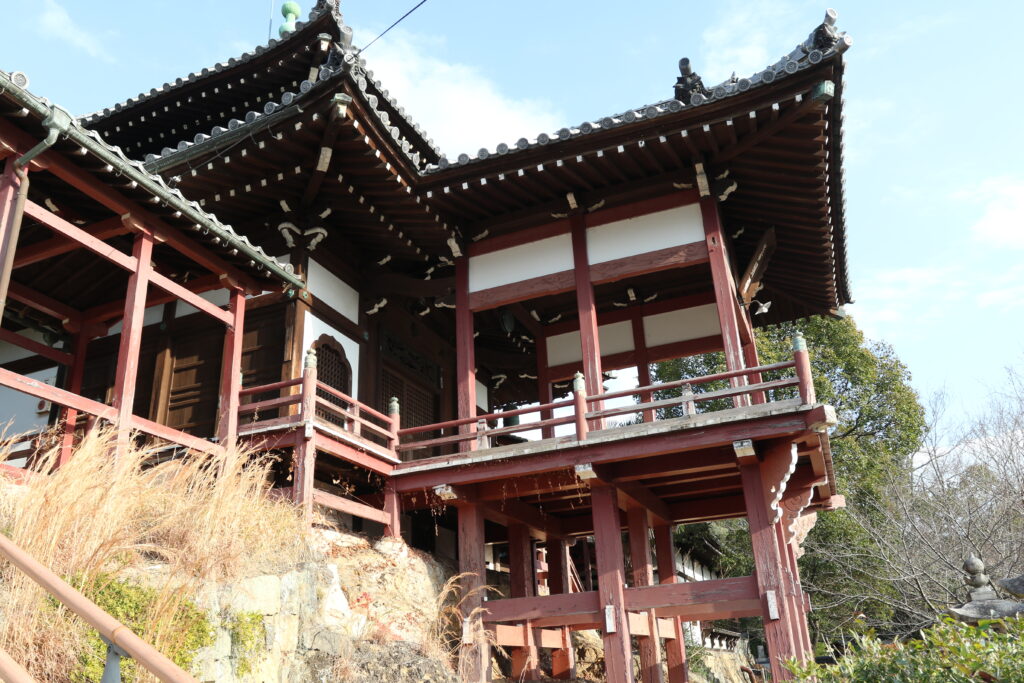
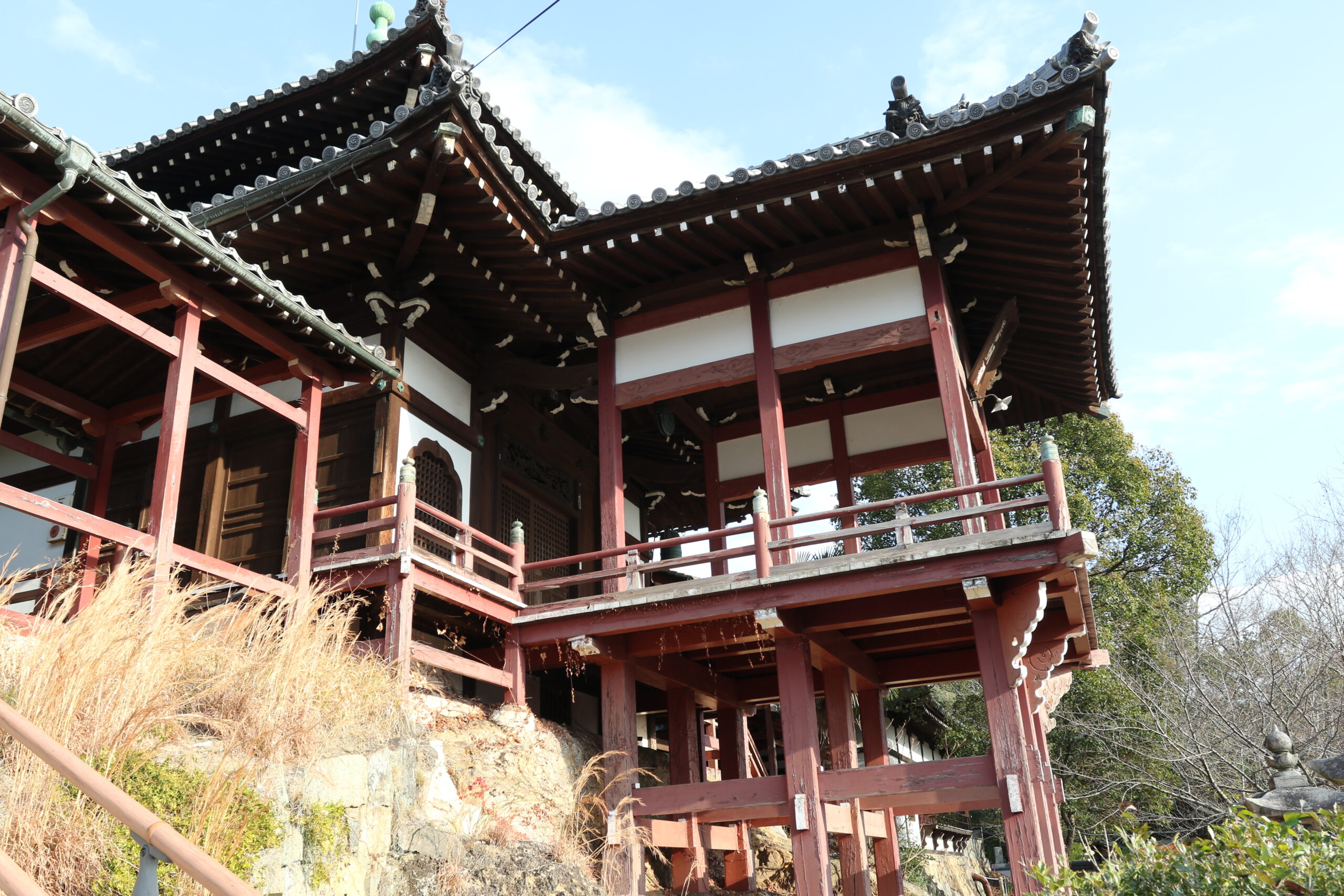
Above the slope stands 普明閣.
Built directly on solid rock, the hall extends outward like a stage.
From below, it looks impossible.
From the side, it reveals careful balance and restraint.
This architecture does not fight nature.
It accepts it.
岩の上に建つ普明閣は、自然に逆らわず、自然を受け入れています。
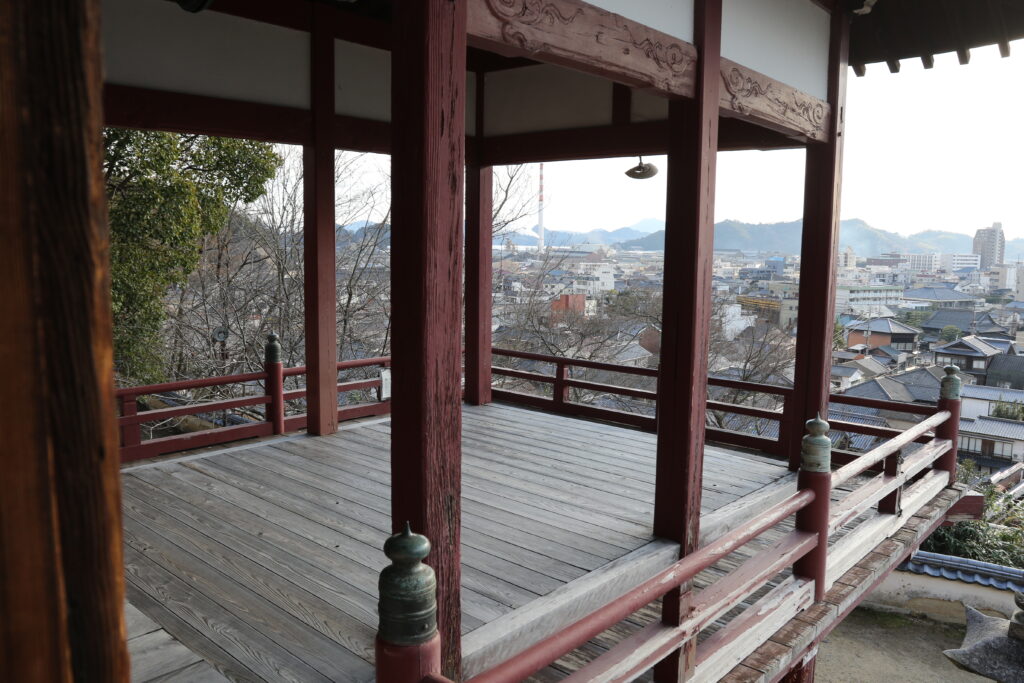
From the wooden floor of the hall, the town of Takehara spreads quietly below.
Not a view meant to dominate, but to watch over.
There is no explanation board here telling you what to feel.
The place allows silence to do the work.
見下ろすのではなく、見守る高さ。
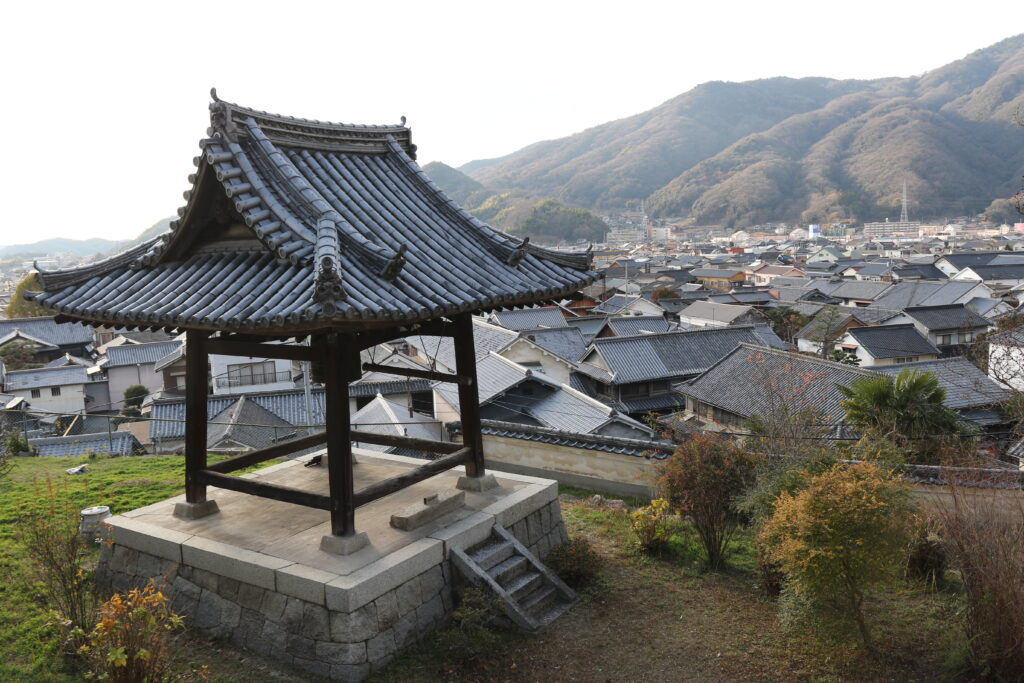
Many people visit 大久野島, known worldwide as Rabbit Island.
But very few stop to explore places like this.
Yet, this quiet temple may tell a deeper story about Japan —
one of patience, balance, and spaces left intentionally empty.
有名な場所のすぐそばに、語られない日本があります。

You do not come here to see something spectacular.
You come here to feel what remains when nothing is added.
And that may be the most Japanese experience of all.