Introduction
Bamboo has been an essential part of everyday life in Japan for centuries.
Growing quickly and harvested sustainably, bamboo connects nature, craftsmanship, and daily living in a unique way.
This article follows the journey of bamboo—from quiet forest groves to carefully handcrafted objects—showing how natural materials become cultural expressions.
Bamboo Forests: A Living Resource
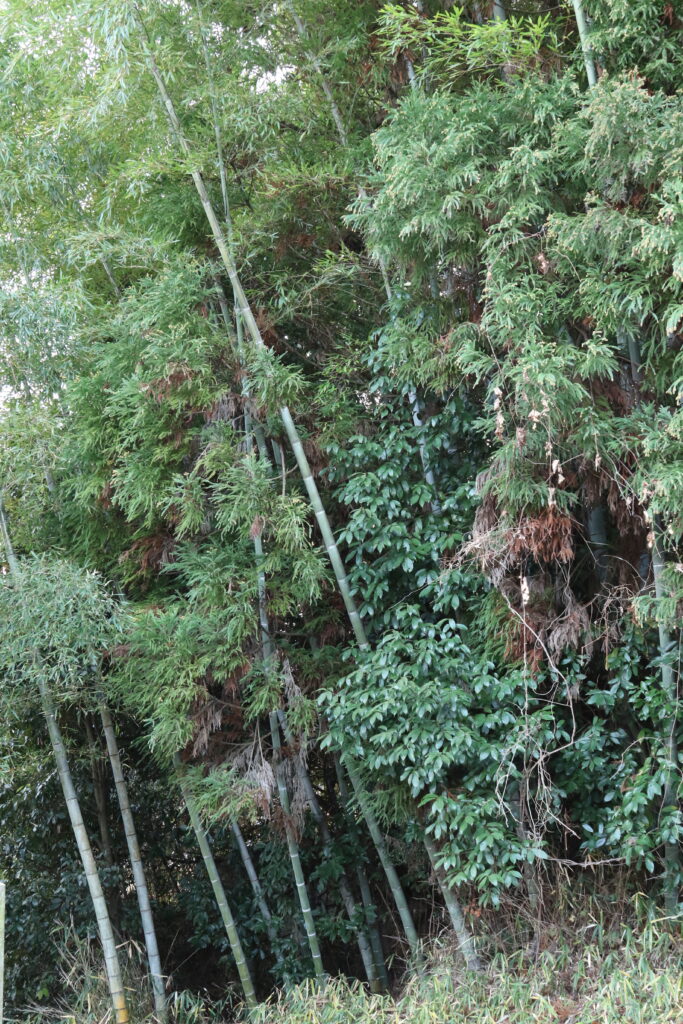
Bamboo forests are a familiar sight in rural Japan.
They grow densely and rapidly, creating landscapes that feel both wild and carefully managed.
Rather than being left untouched, bamboo forests are traditionally maintained.
Regular harvesting prevents overgrowth and keeps the forest healthy, ensuring bamboo remains a renewable resource for future use.
Harvesting Bamboo for Craftsmanship
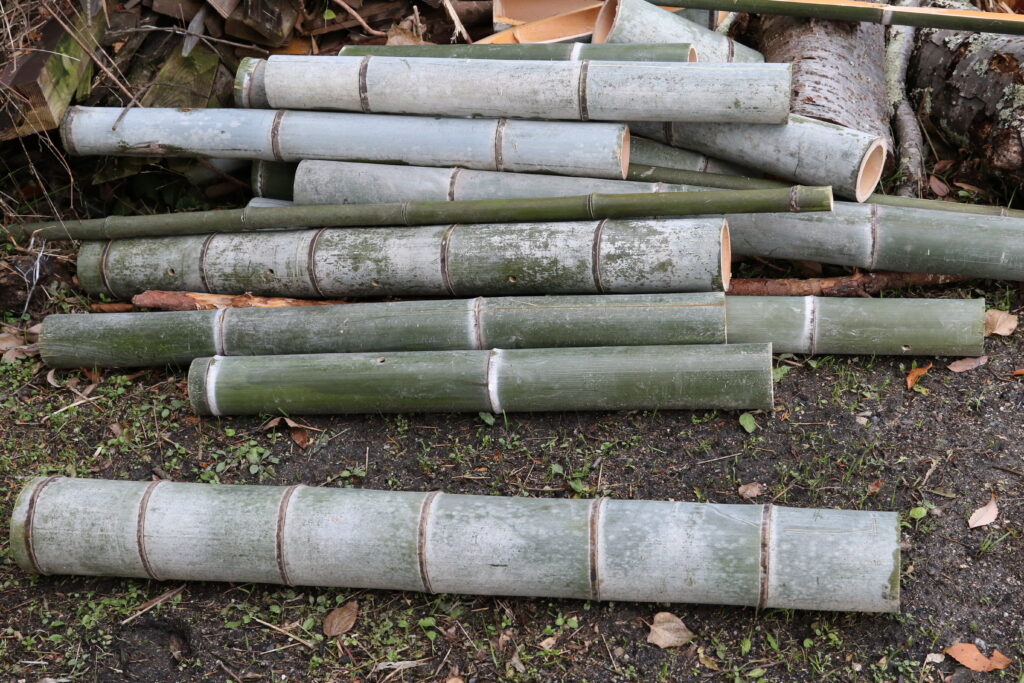
Once cut, bamboo poles reveal their strength and versatility.
Lightweight yet durable, bamboo has long been valued for tools, containers, and decorative objects.
Each pole carries subtle differences in thickness and texture, which craftsmen carefully select depending on the final purpose.
Bamboo Pinwheels: Movement and Color
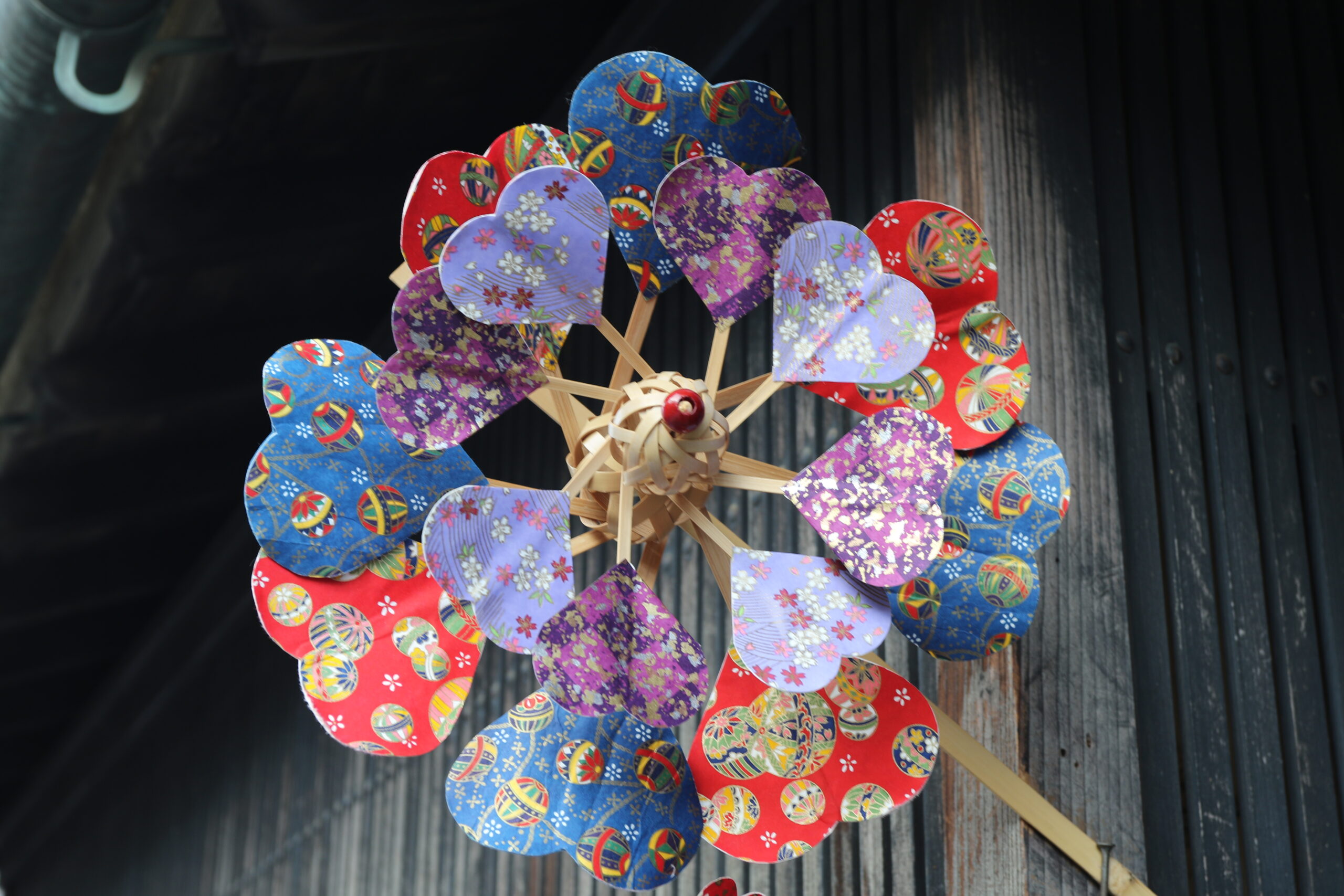
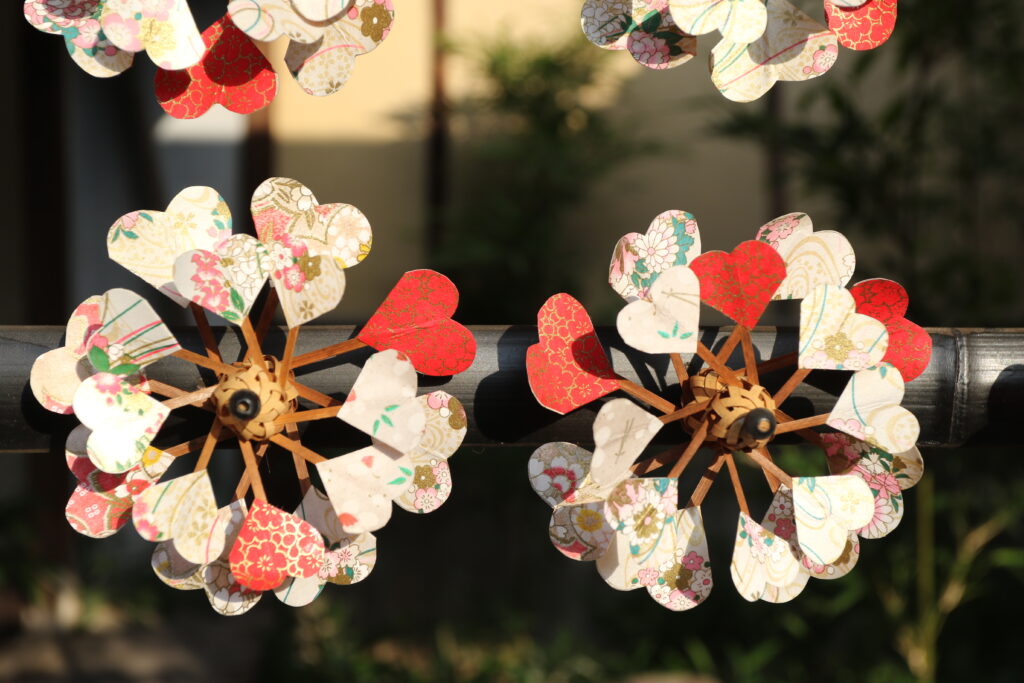
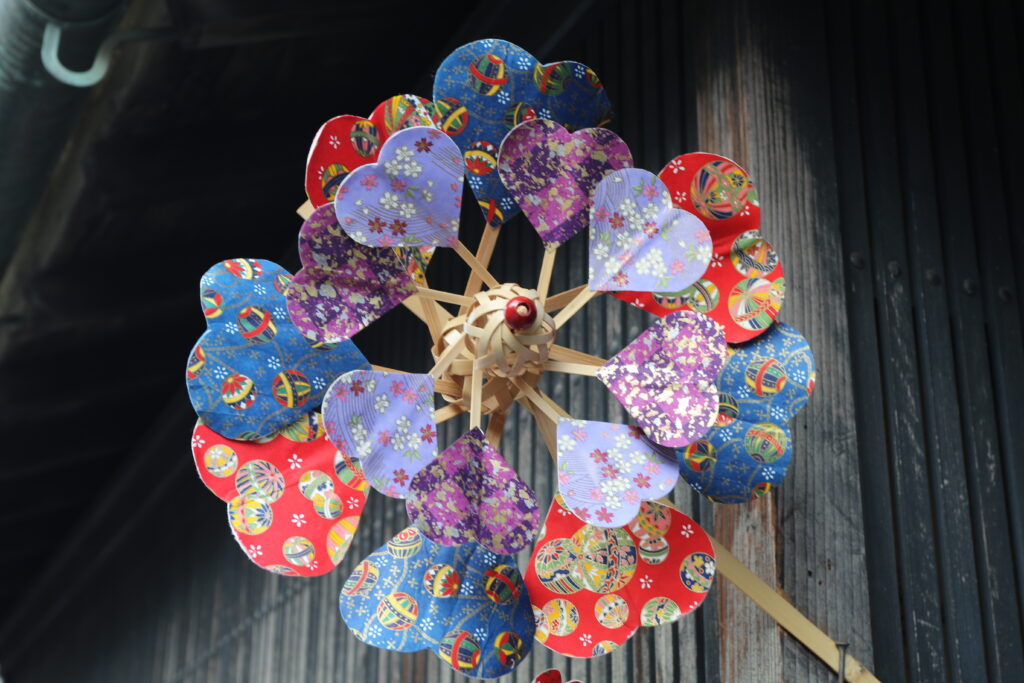
One of the most charming bamboo crafts is the traditional pinwheel.
Thin bamboo strips form the structure, while colorful paper creates rotating petals that catch the wind.
These pinwheels reflect a sense of playfulness and seasonal joy, often seen in festivals or as gentle decorations outside homes.
Their movement adds life to still spaces, reminding viewers of the connection between wind, sound, and motion.
Bamboo Lanterns: Light and Shadow
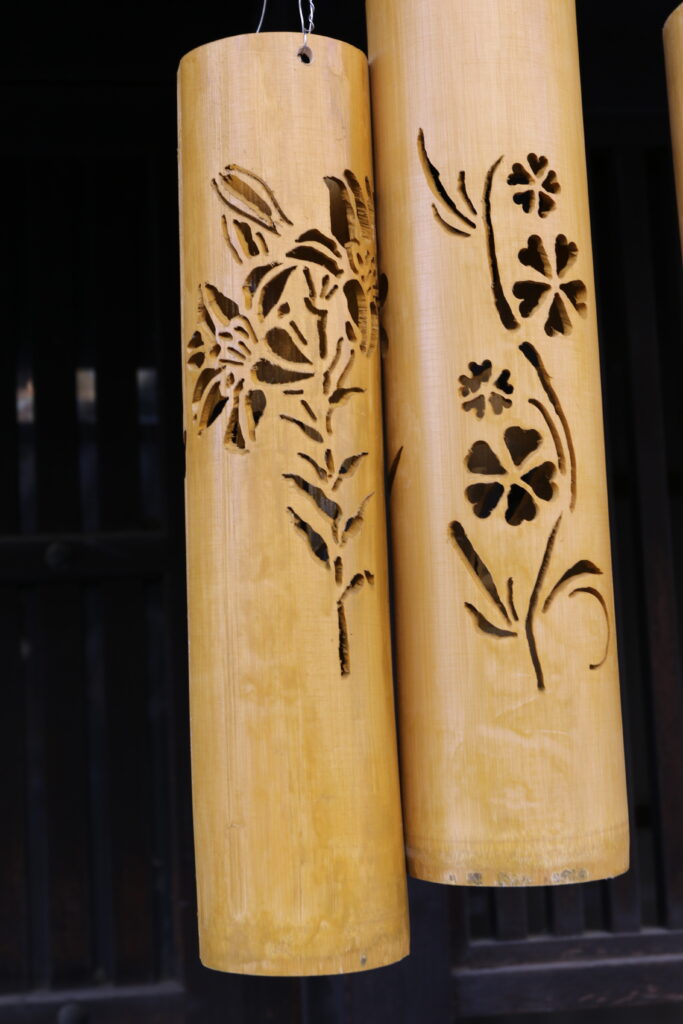
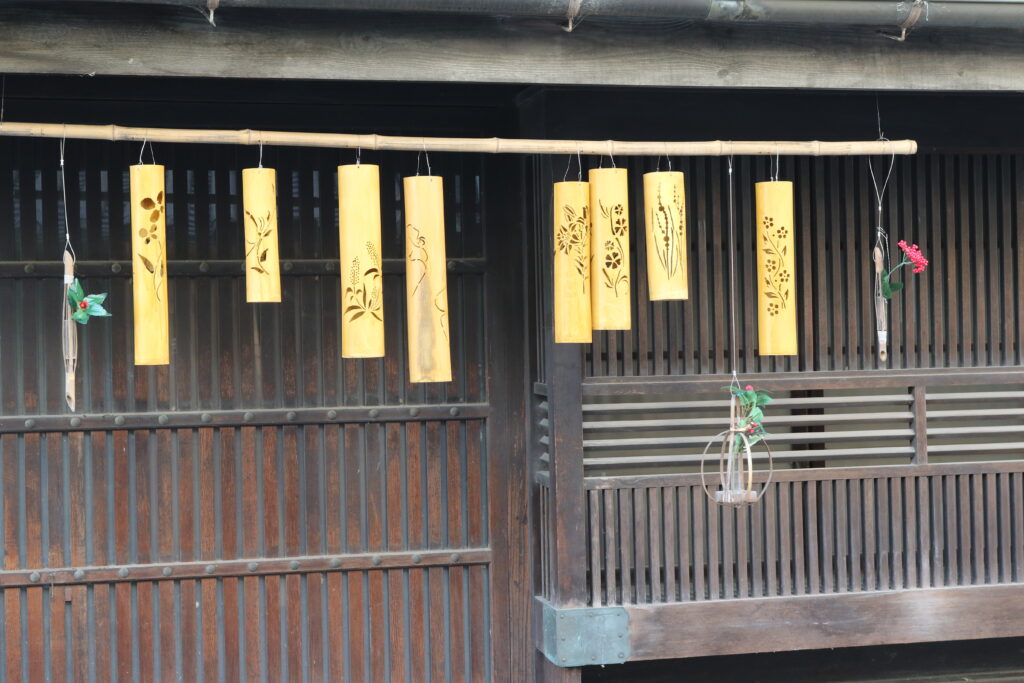
Bamboo lanterns show a different side of craftsmanship.
Patterns are carefully carved into bamboo cylinders, allowing light to pass through floral and natural motifs.
When illuminated, the lanterns create soft shadows that transform walls and walkways into quiet, atmospheric spaces.
They embody the Japanese aesthetic of subtle beauty rather than brightness.
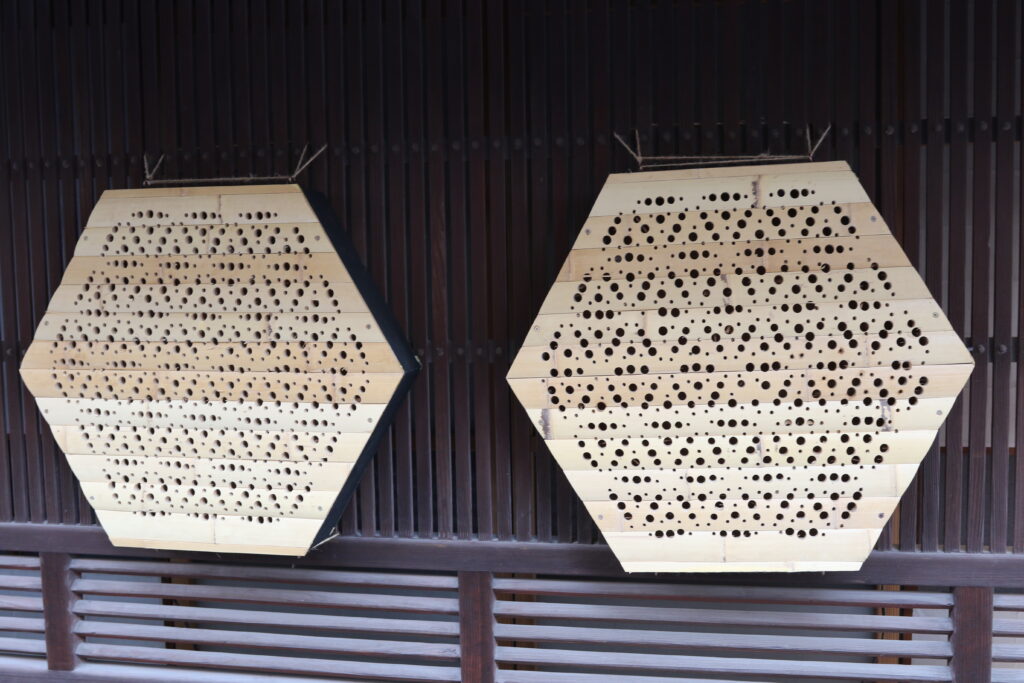
Bamboo Crafts in Everyday Life
When hung under the eaves of traditional houses, bamboo crafts become part of daily scenery.
They are not displayed as museum pieces, but as objects meant to live with people—moving with the wind, glowing at night, and aging naturally over time.
This quiet presence reflects a long-standing Japanese philosophy: beauty emerges when nature and human hands work together.
Conclusion
From forest to finished form, bamboo represents sustainability, creativity, and tradition.
These crafts are more than decorative objects—they are expressions of a lifestyle shaped by respect for natural materials.
Even today, bamboo continues to tell the story of how Japan transforms simplicity into lasting beauty.