Japan is often associated with high-tech fighter jets, but its aviation history is far broader and deeper than that.
At the 岐阜かかみがはら航空宇宙博物館, visitors can literally walk through the evolution of Japan’s post-war aviation—especially through its remarkable outdoor aircraft exhibits.
Standing beneath the open sky, these aircraft tell stories of maritime patrol, search and rescue, transportation, and technological ambition.
Each machine represents a different answer to the same question:
How should a maritime nation use the sky?
戦闘機だけではない、日本の航空史。その答えが、この博物館の屋外展示には詰まっています。
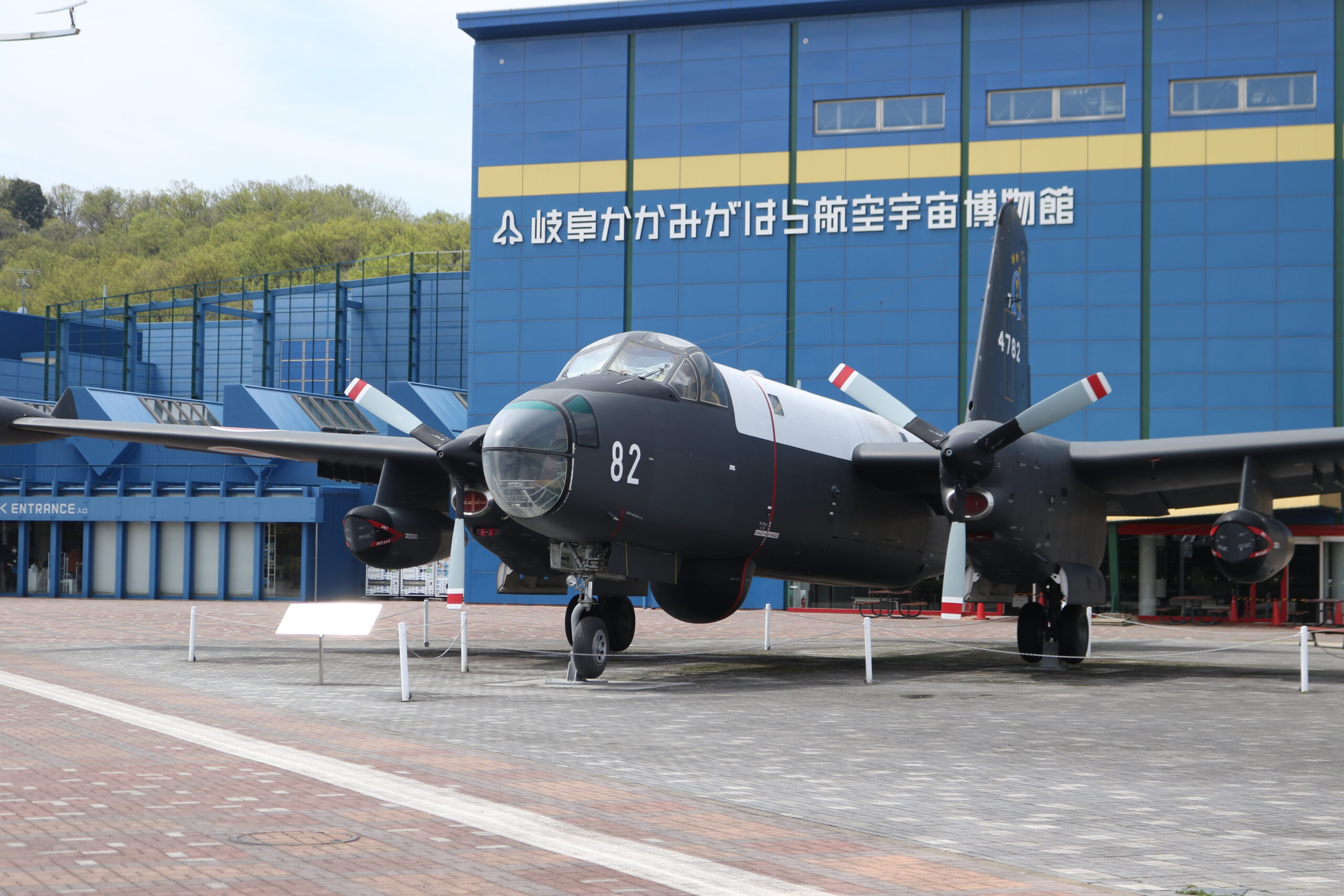
P2-V7 Neptune
The P2-V7 Neptune represents the Cold War era, when long-range maritime patrol was essential.
With its powerful engines, extended fuselage, and prominent radar nose, the aircraft reflects American aviation design adapted for Japan’s maritime defense needs.
It was built to fly long hours over vast stretches of ocean—detecting submarines, tracking targets, and protecting sea lanes vital to the nation’s survival.
冷戦期、日本の海を守るために選ばれた「信頼性重視」の設計思想がよく分かる機体です。
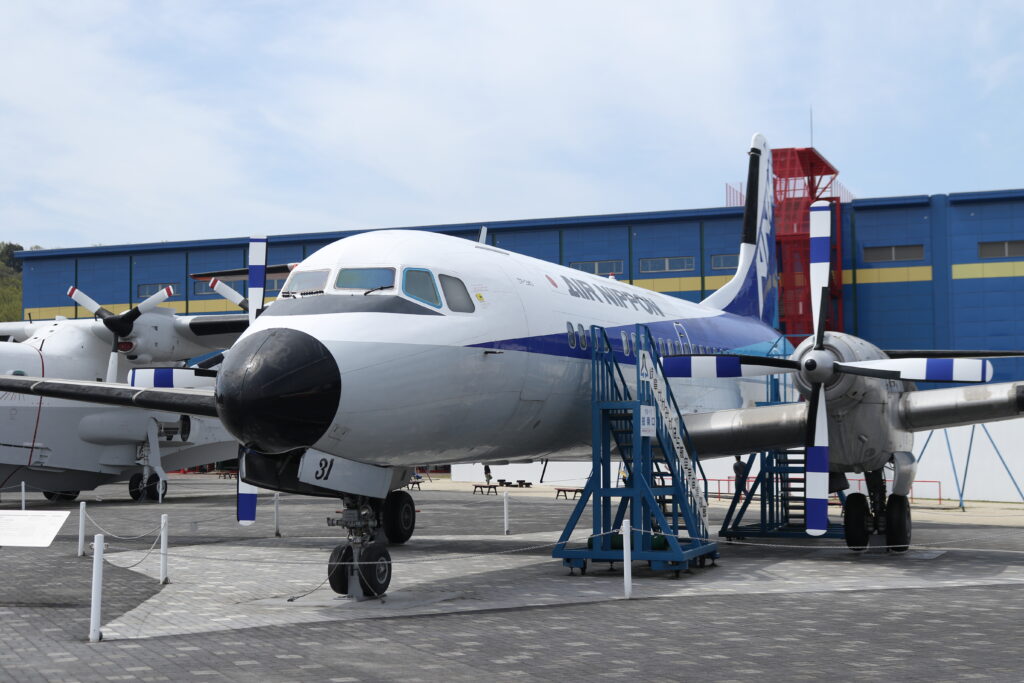
YS-11 (Maritime Patrol Variant)
In contrast, the YS-11 tells a different story.
As Japan’s first post-war domestically developed aircraft, it symbolizes recovery and independence.
Its patrol variant shows how a civilian airframe could be adapted for military and maritime roles—an approach focused on versatility rather than sheer size.
国産機という点だけでも、日本の航空史では特別な存在です。
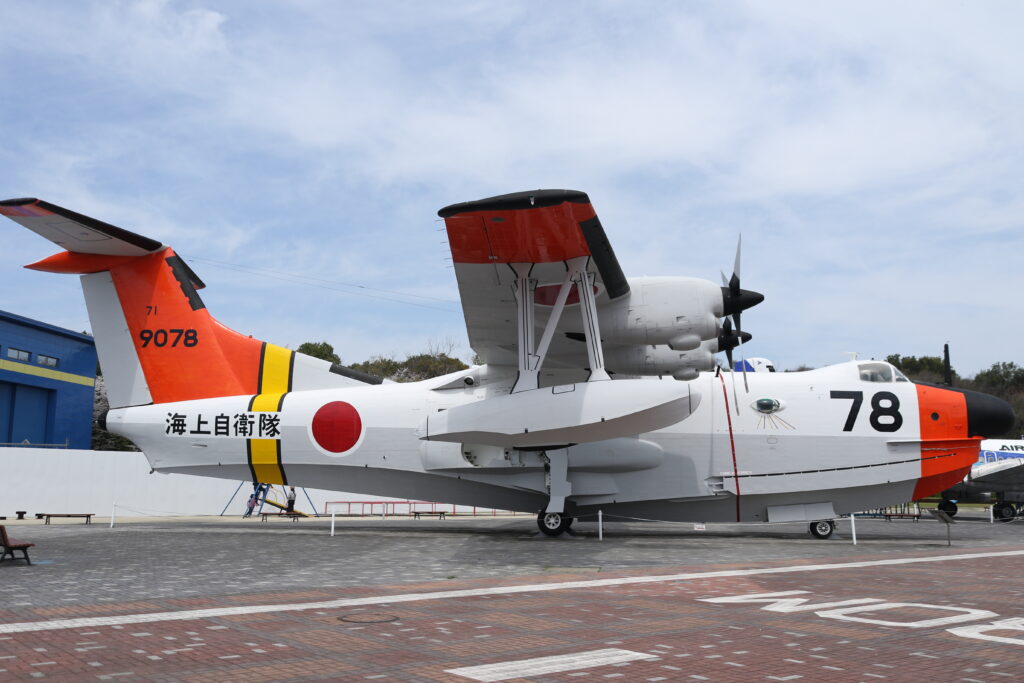
PS-1 Flying Boat
Perhaps the most uniquely Japanese aircraft on display is the PS-1 flying boat.
Designed specifically for anti-submarine warfare and search and rescue, it reflects the realities of an island nation with vast coastlines and limited runways.
Able to land on open water, the PS-1 represents a solution no other country pursued in quite the same way—a blend of engineering ambition and geographic necessity.
「滑走路がなくても任務は遂行する」という、日本ならではの発想です。
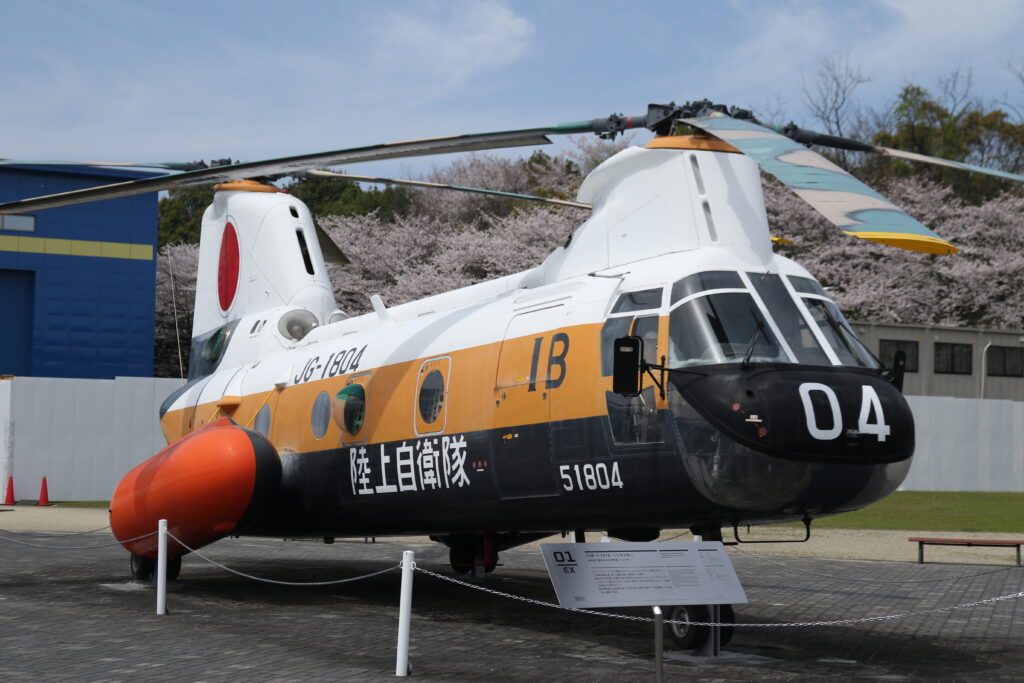
KV-107 (V-107 / CH-46 series)
The KV-107 introduces yet another philosophy: mobility without dependence on runways.
Its tandem-rotor design allowed heavy transport, disaster relief, and troop movement—roles where speed and flexibility mattered more than range.
Placed alongside fixed-wing patrol aircraft, the helicopter highlights how different technologies coexisted to serve complementary purposes.
固定翼とは真逆の発想で、日本の防災・輸送を支えた存在です。
Conclusion|まとめ
Walking among these aircraft outdoors is like walking through a timeline of ideas rather than machines.
Each aircraft reflects not only its era but also the challenges Japan faced—geography, technology, and responsibility over the surrounding seas.
The outdoor exhibition at the Gifu Aerospace Museum does more than display aircraft.
It quietly tells the story of how Japan learned to protect, connect, and understand the sky above it.
機体を眺めるだけで、日本の航空思想の変遷が自然と見えてくる。
この博物館が特別な理由は、まさにそこにあります。