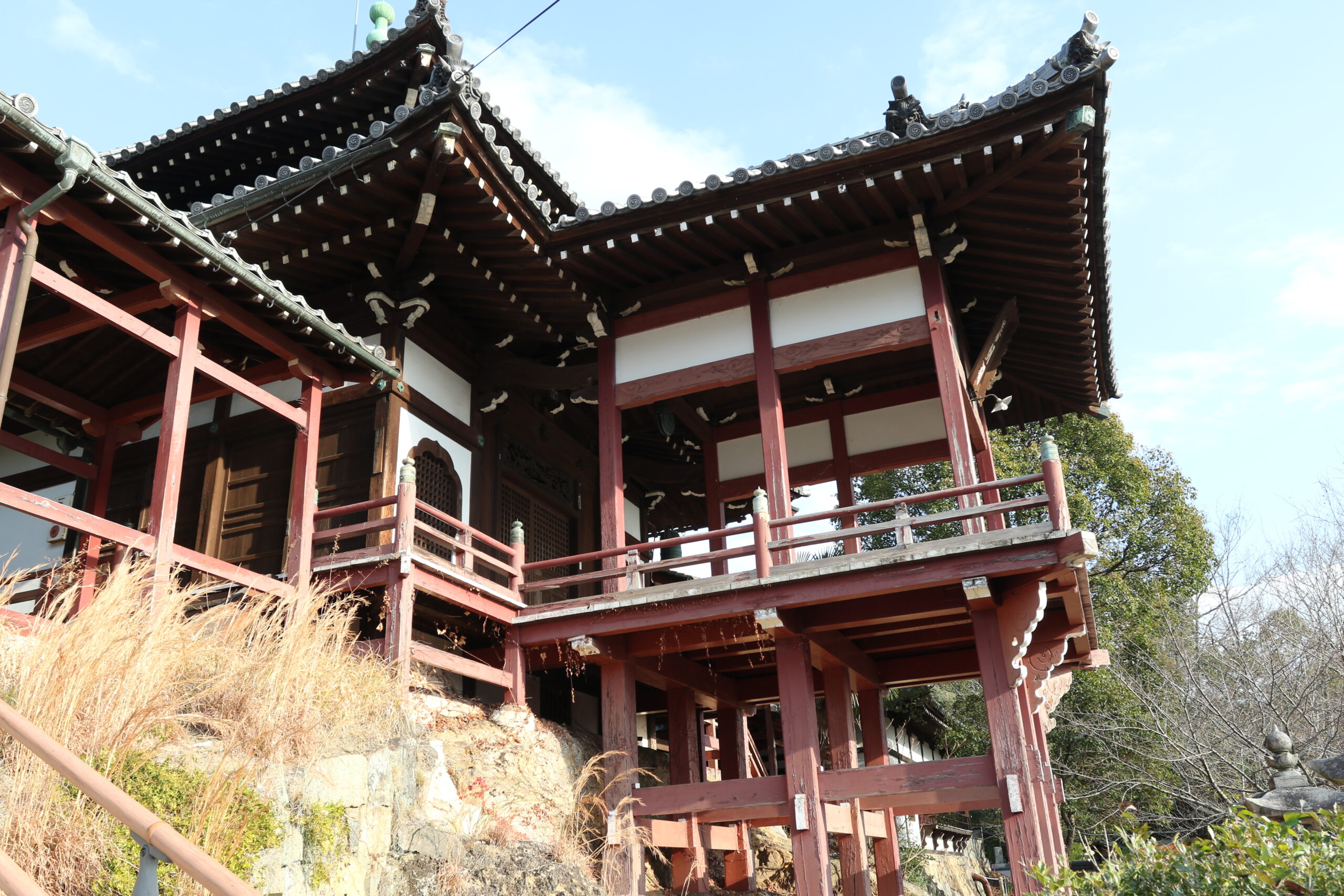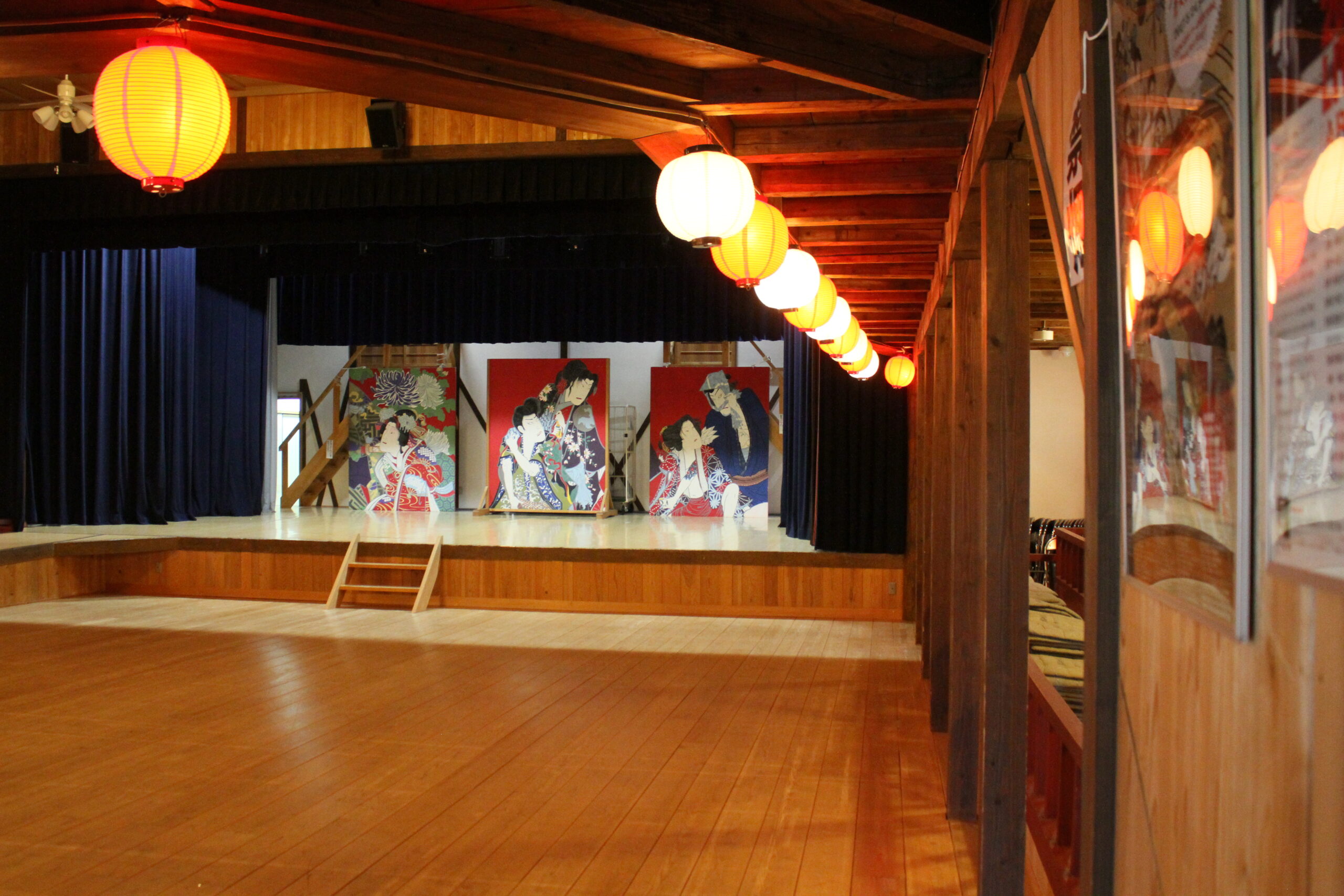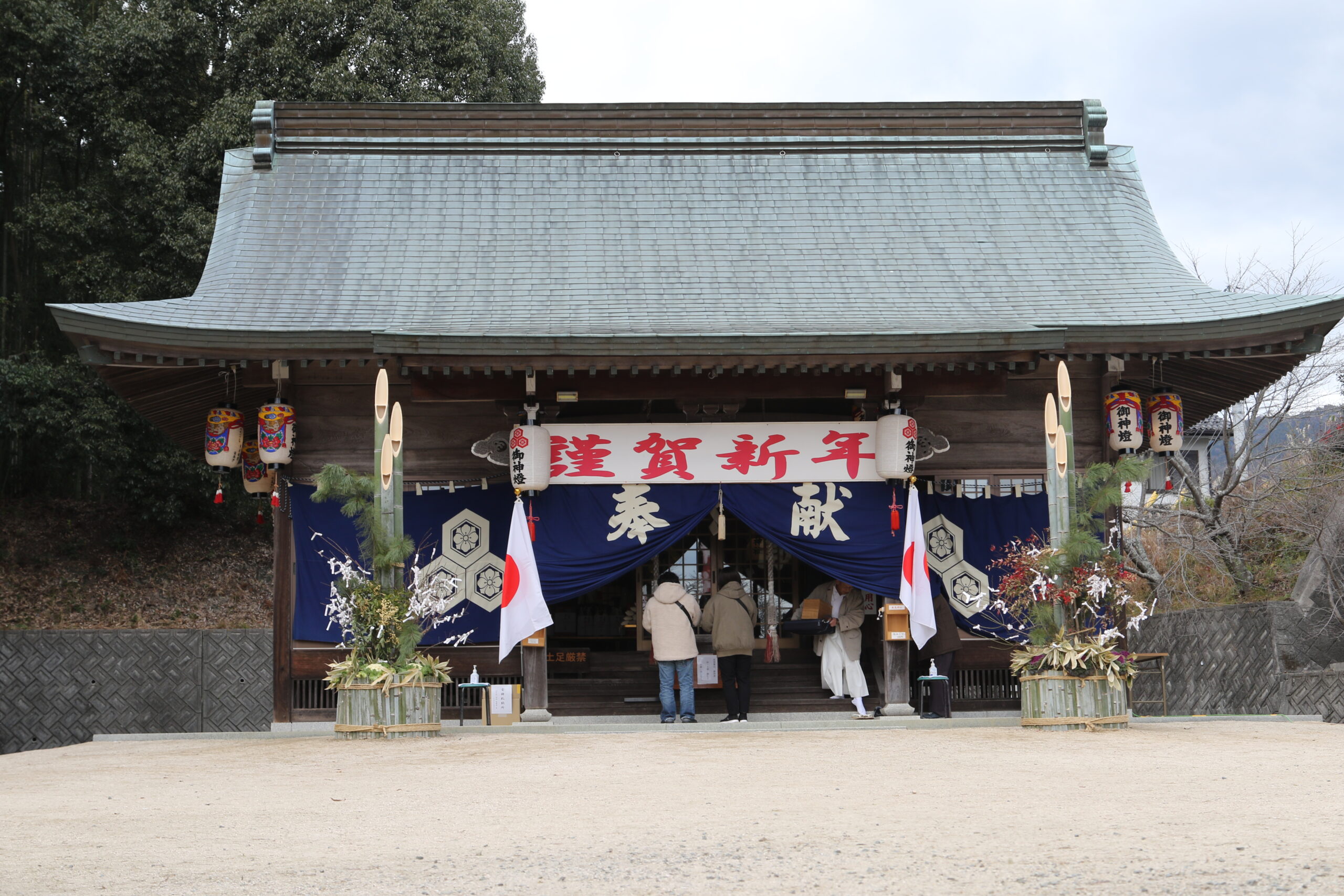
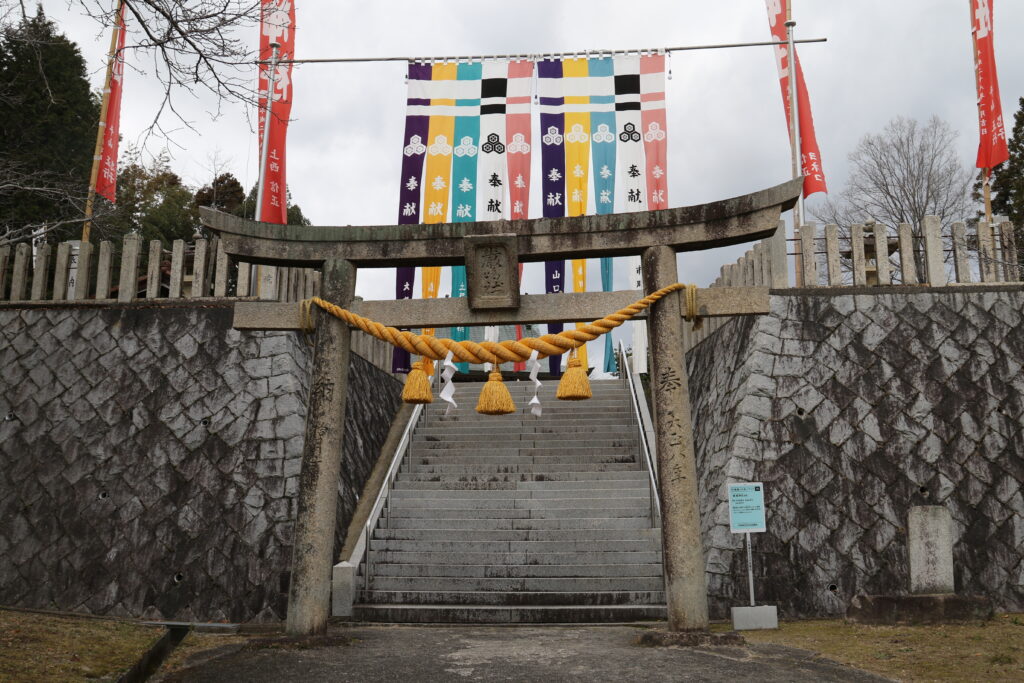
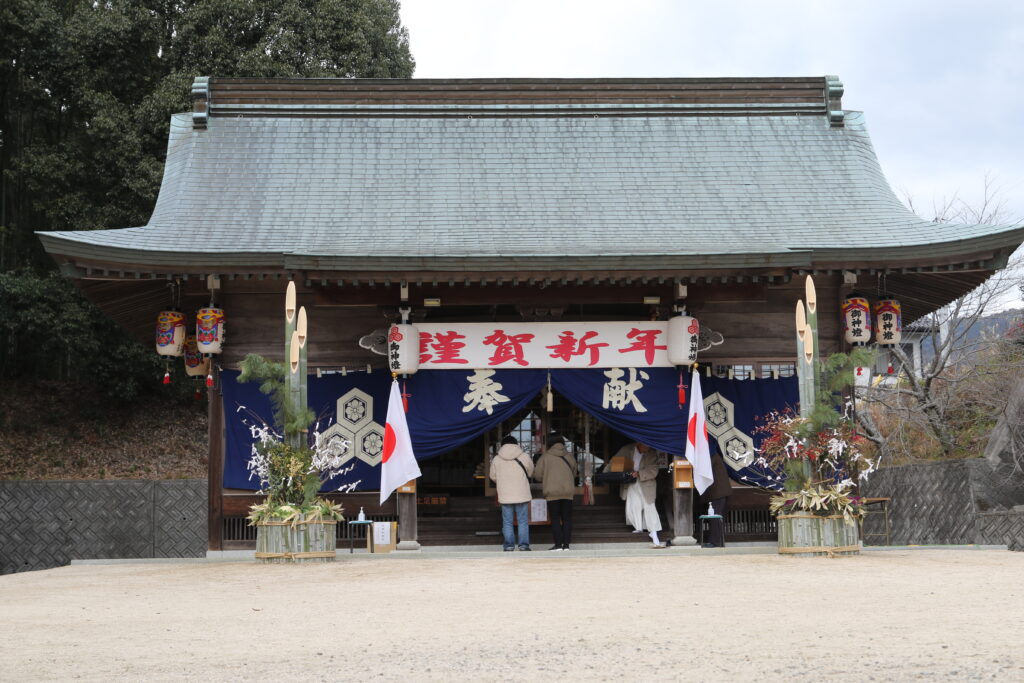
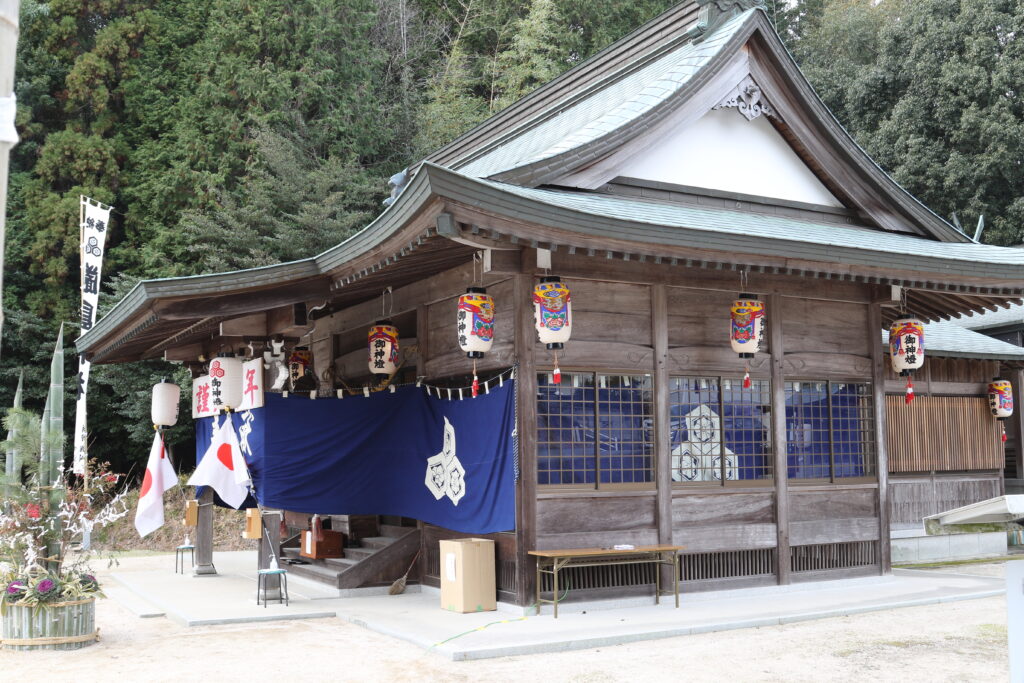
Just one minute on foot from my home stands a small Shinto shrine that becomes gently alive at the turn of the year. These photographs were taken during the New Year period at Itsukushima Shrine, capturing the calm atmosphere of a local Hatsumōde—the first shrine visit of the year.
Passing beneath the stone torii gate, the sacred boundary between the everyday world and the spiritual realm is clearly felt. A thick shimenawa rope with hanging tassels marks the space as purified, while colorful banners and New Year decorations add quiet dignity rather than spectacle.
The wooden shrine buildings are adorned with kadomatsu made from bamboo and pine, traditional symbols of longevity and renewal. Lanterns hang from the eaves, and deep blue curtains display family crests, reminding visitors of the long continuity of local faith and community.
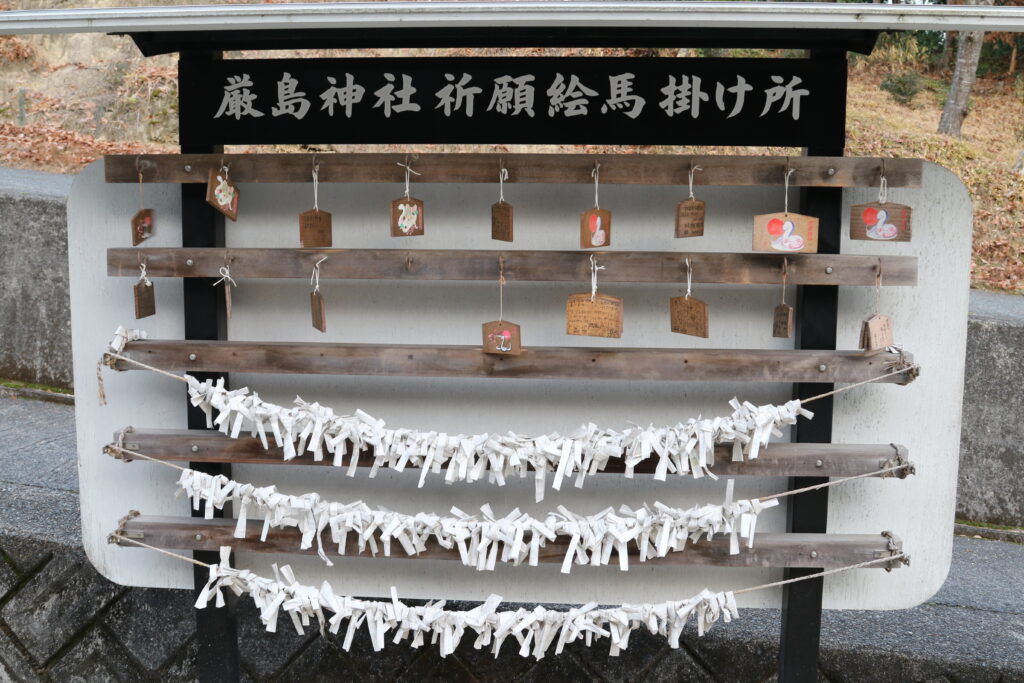
At the prayer area, visitors approach one by one, offering coins, bowing, and making silent wishes for health, peace, and stability in the year ahead. Nearby, ema—small wooden prayer plaques—are hung carefully, each carrying a personal hope written in careful handwriting.
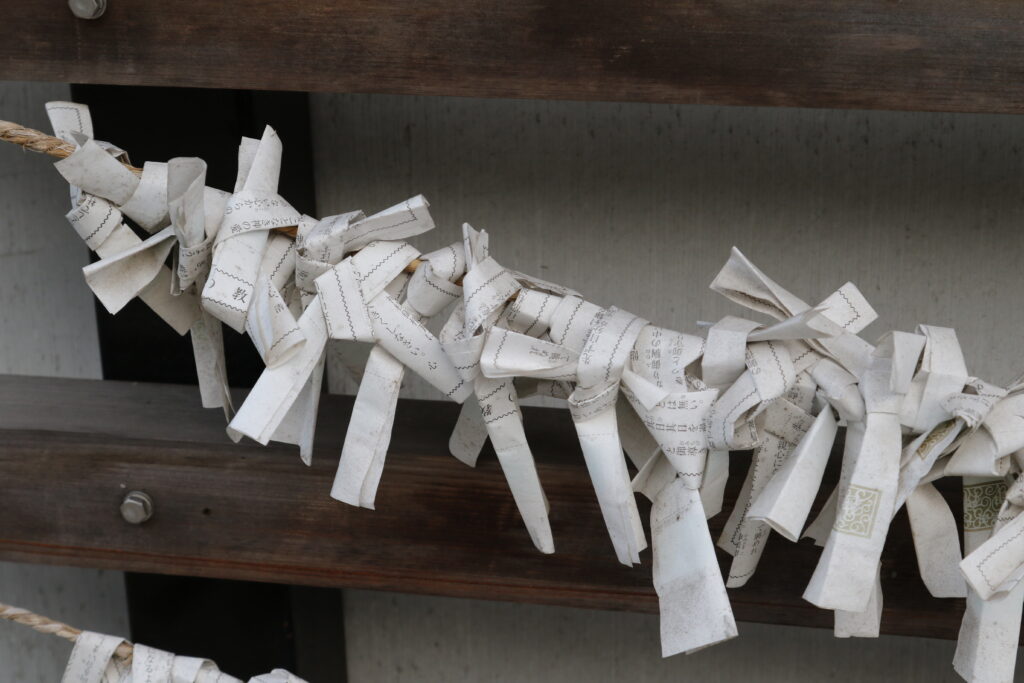
Rows of white omikuji fortune papers are tied neatly to wooden racks. Some fortunes are good, others less so, but all are left behind with the belief that worries, too, can be entrusted to the gods.
Unlike famous tourist shrines, this place remains modest and intimate. There are no crowds, only familiar faces and the soft sound of footsteps on gravel. The New Year here is not celebrated loudly, but thoughtfully—rooted in routine, gratitude, and quiet reflection.
These images document a simple but deeply Japanese moment: the beginning of a new year, welcomed not with fireworks, but with prayer, tradition, and stillness.