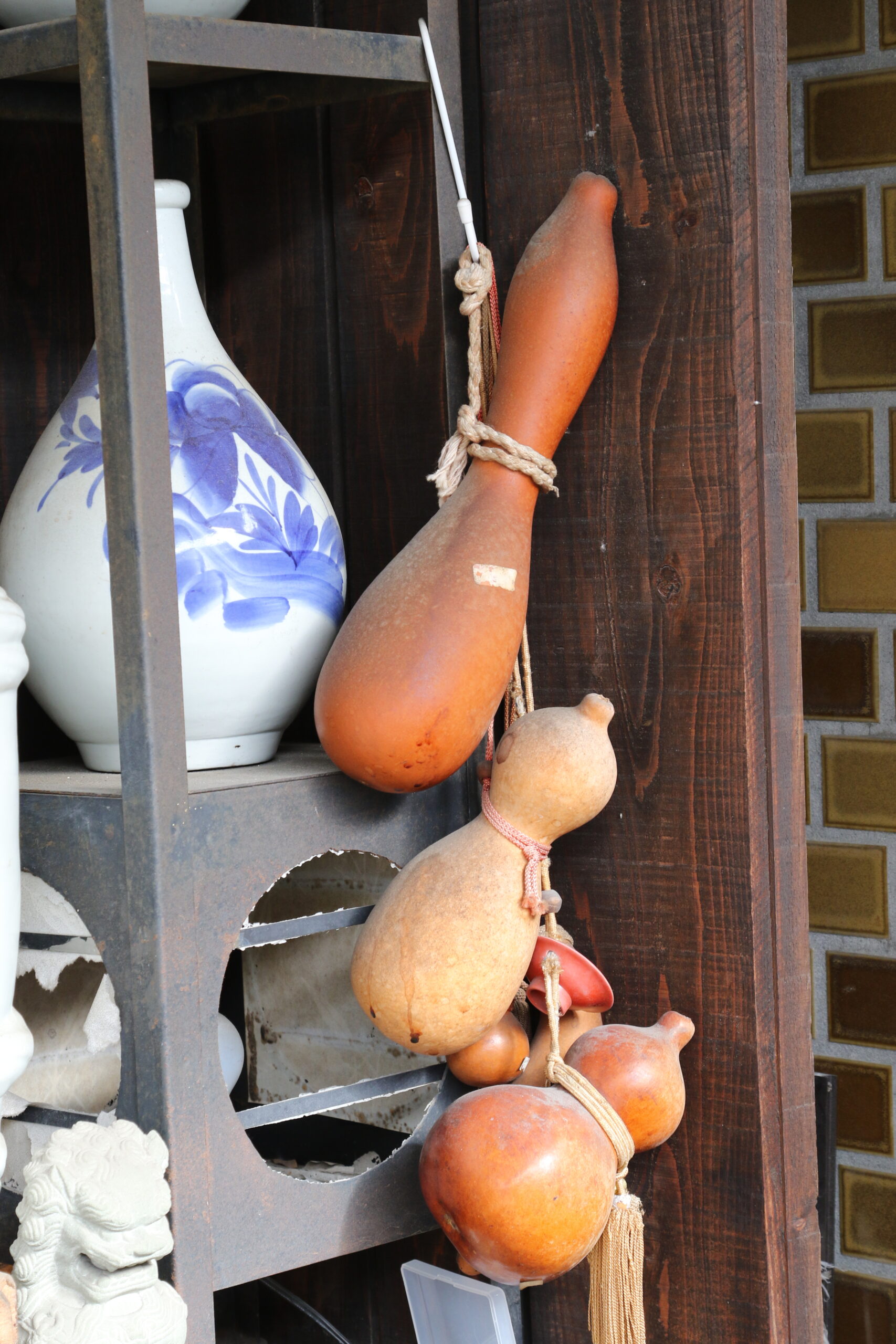
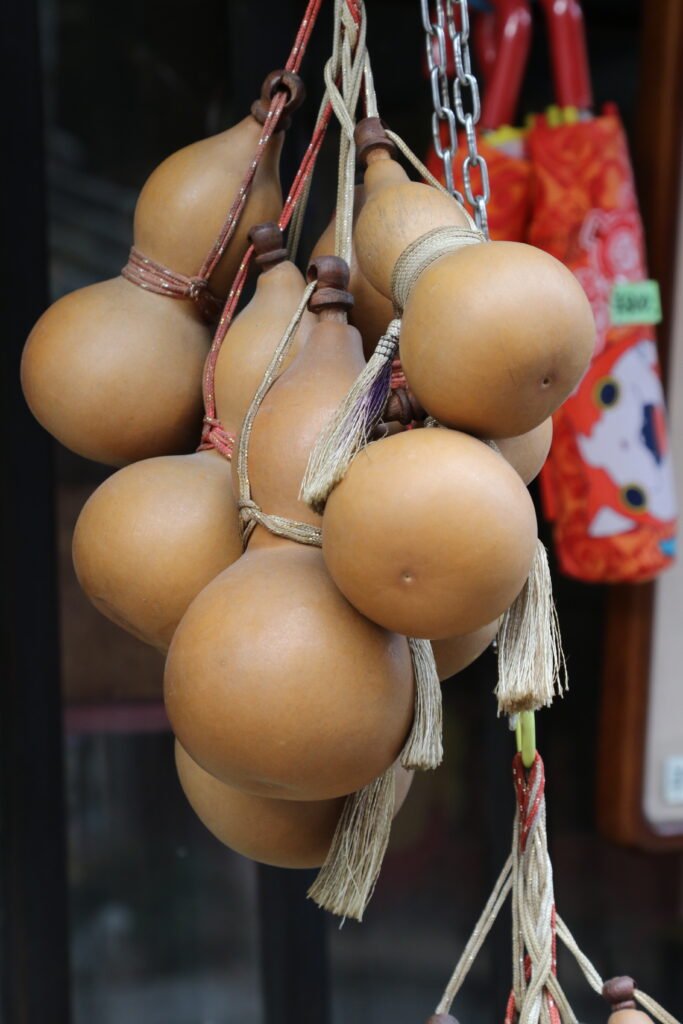
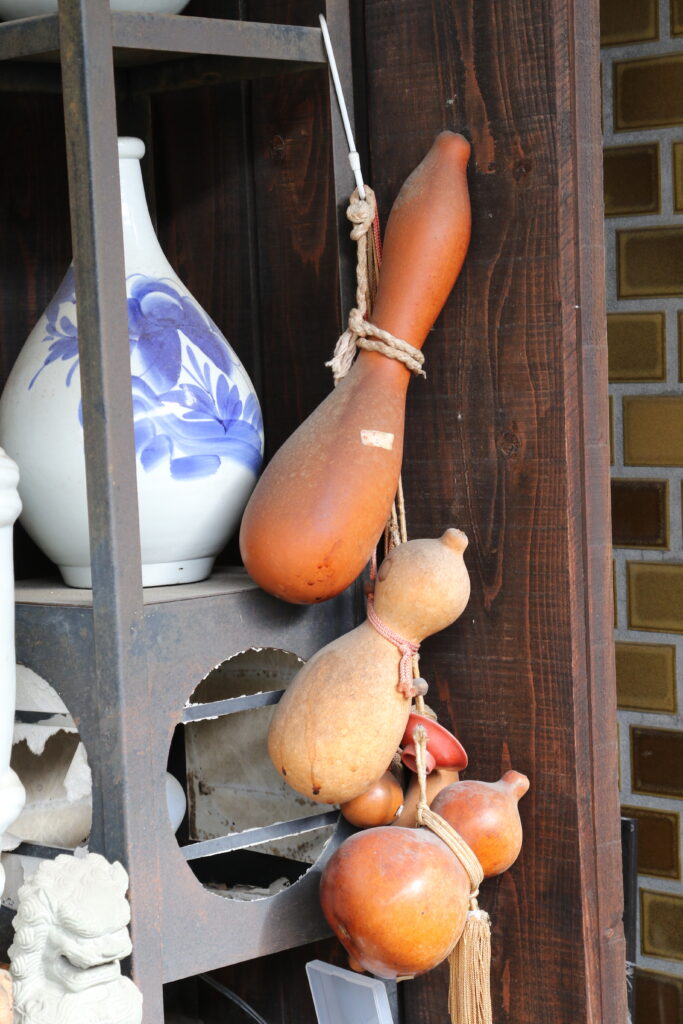
In a quiet corner of an old Japanese town, you may notice dried gourds hanging from a wooden beam or resting beside everyday objects.
They look simple, even mysterious.
To many visitors from abroad, the first question is usually the same:
What are these for?
These are gourds—plants once deeply woven into everyday life in Japan.
More Than Decoration
Before modern containers existed, gourds were practical tools.
Their hard shells made them ideal for carrying water, alcohol, or medicinal liquids.
Lightweight, durable, and naturally shaped, they were used by travelers, farmers, and merchants alike.
Over time, gourds also gained symbolic meaning.
They became associated with good fortune, protection, and long life.
Some were believed to ward off illness. Others were simply trusted companions for daily work.
Hanging in Plain Sight
What makes these gourds special is not their rarity—but their placement.
They are not hidden behind glass.
They hang quietly among wooden walls, pottery, ropes, and tools.
This is how they have always existed:
not as artifacts, but as part of ordinary life.
In many historic towns, such objects remain even after their original purpose has faded.
They stay because removing them would erase a small piece of memory.
A Silent Cultural Trace
Today, few people use gourds in the way they once did.
Plastic bottles and metal flasks replaced them long ago.
Yet the gourds still hang there.
They remind us that culture does not always survive through museums or explanations.
Sometimes, it survives simply by being left alone.
In that silence, these gourds continue to tell stories—
about how people carried water, shared drinks, protected their health,
and lived with what nature provided.
A Different Way to See Japan
To understand Japan, it is not always necessary to look at temples or famous landmarks.
Sometimes, understanding begins with noticing a small, ordinary object
that refuses to disappear.
The gourds hanging in old towns are not trying to be seen.
That is precisely why they matter.

 ポチップ
ポチップ